
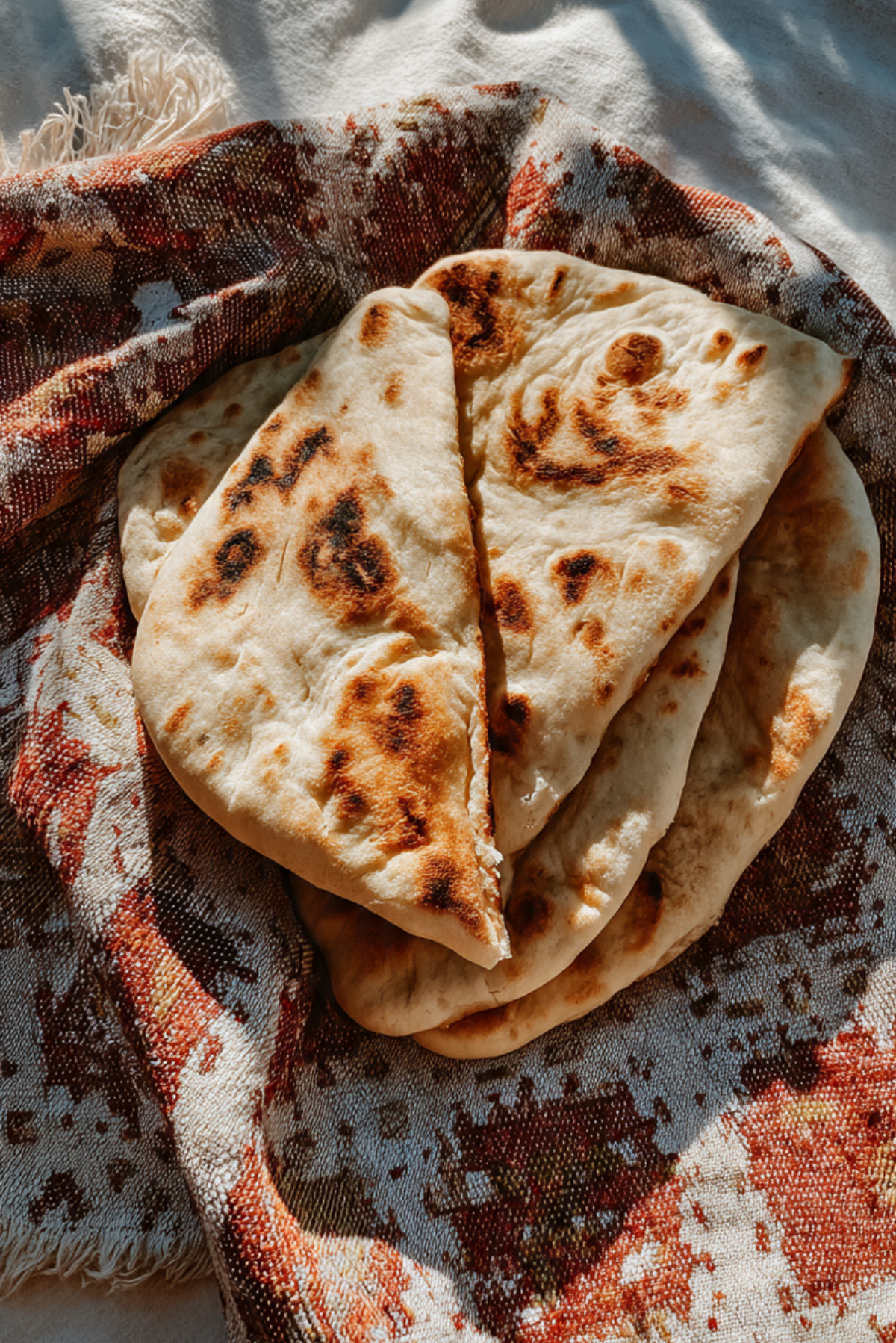
Warm, rustic, and filled with cultural soul, Aghroum N’Thajin is more than just bread. It’s the scent of tradition, the sound of a sizzle on a hot griddle, and the comfort of every bite that takes you to the heart of the Atlas Mountains. Picture a crispy, golden outside hugging a tender and chewy inside, ready to soak up every last drop of olive oil, honey, or soup it’s paired with. This is the kind of bread that doesn’t just accompany a meal, it becomes part of the experience.
Behind the Recipe
There’s something so nostalgic about making flatbread from scratch. I remember watching my grandmother mix the flour and barley, forming dough with hands that had made it hundreds of times before. No fancy tools, just a flat griddle and open flame. The sound of the dough hitting the hot surface, the smell that filled the room, and the way she’d flip each one with rhythm — all of that lives on in every batch I make.
Recipe Origin or Trivia
Aghroum N’Thajin hails from the Berber communities in the Middle and High Atlas of Morocco. “Aghroum” simply means “bread” in Tamazight, and “Thajin” refers to how it’s grilled or cooked on a flat pan. Traditionally made with barley or semolina, it reflects the resourcefulness of mountain cuisine — simple ingredients, big flavor, and nourishing results. This bread was often served with tagines, honey, or buttermilk, especially during winter mornings when warmth was essential.
Why You’ll Love Aghroum N’Thajin
There’s so much to love about this humble, hearty bread. Let’s break it down:
Versatile: Delicious with both sweet and savory toppings like honey, cheese, olive oil, or soups.
Budget-Friendly: Made from basic pantry ingredients — no special flours or expensive gadgets needed.
Quick and Easy: Comes together in under an hour with minimal prep.
Customizable: Adjust the thickness, flour blend, or spices to make it your own.
Crowd-Pleasing: A hit at breakfast, brunch, or alongside dinner. It disappears fast.
Make-Ahead Friendly: Prepare the dough ahead and cook when needed.
Great for Leftovers: Reheat in a dry pan, toast, or freeze — still amazing.
Chef’s Pro Tips for Perfect Results
Getting that iconic crust and soft inside is easier than you think, with just a few key tricks:
- Use warm water for better dough activation and easier kneading.
- Let the dough rest covered for 15 to 20 minutes to relax the gluten.
- Preheat your griddle or pan properly — it should be hot enough to sizzle a water droplet.
- Press or roll the dough evenly to ensure even cooking.
- Flip the bread only once or twice to avoid drying it out.
Kitchen Tools You’ll Need
You don’t need much to make this magic happen, just a few kitchen basics:
Mixing Bowl: To combine your flours and knead the dough.
Flat Griddle or Nonstick Pan: Traditional and essential for the golden crust.
Clean Kitchen Towel: To cover and rest your dough.
Rolling Pin (optional): For shaping the dough evenly, or use your hands if preferred.
Spatula or Tongs: To flip the bread gently as it cooks.
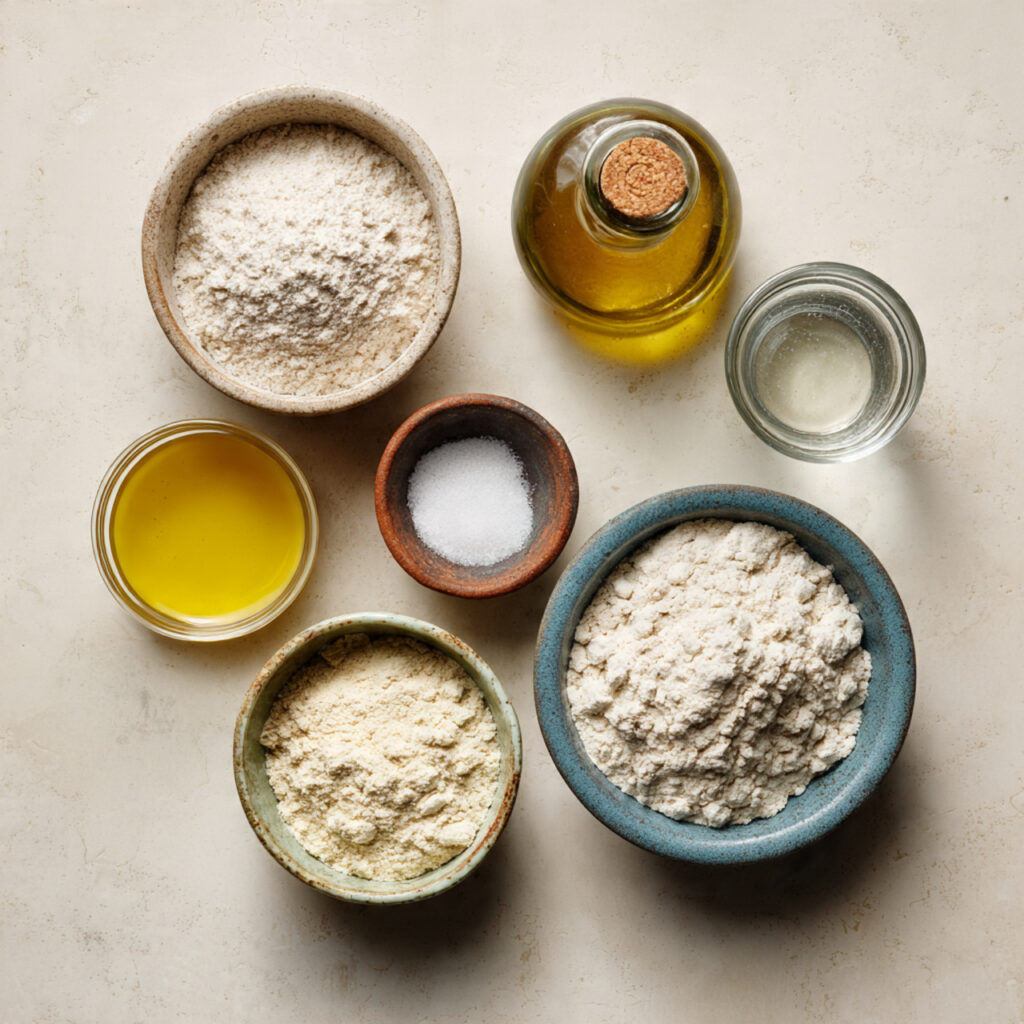
Ingredients in Aghroum N’Thajin
Let’s break down this recipe, ingredient by ingredient, and see how each one adds its own note to the final flavor:
- Barley Flour: 2 cups. Adds a nutty, earthy taste and rustic texture.
- All-Purpose Flour: 1 cup. Balances out the density of barley for a tender crumb.
- Salt: 1 teaspoon. Enhances the natural flavor and supports browning.
- Olive Oil: 2 tablespoons. Adds richness and helps the bread crisp up on the outside.
- Warm Water: About 1 cup. Binds the dough and activates the flours.
Ingredient Substitutions
You can make this your own with what you have on hand. Here are some easy swaps:
Barley Flour: Whole wheat flour.
All-Purpose Flour: Spelt or bread flour.
Olive Oil: Any neutral oil like sunflower or vegetable oil.
Salt: Sea salt or pink Himalayan salt.
Ingredient Spotlight
Barley Flour: This flour is rich in fiber and has a naturally nutty flavor. It gives the bread a wholesome depth and slightly chewy texture that’s perfect for hearty meals.
Olive Oil: Not only does it help crisp up the bread, but it also adds a subtle richness and aroma that makes every bite taste authentic.
Instructions for Making Aghroum N’Thajin
Get ready to have fun and get your hands a little flour-dusted. Here are the steps we’ll follow:
1. Preheat Your Equipment:
Heat a flat griddle or heavy-bottomed pan over medium heat until hot.
2. Combine Ingredients:
In a large mixing bowl, combine barley flour, all-purpose flour, and salt. Slowly drizzle in the olive oil and warm water, mixing until a dough forms. Knead for about 8–10 minutes until smooth and pliable.
3. Prepare Your Cooking Vessel:
Wipe your griddle with a touch of oil using a paper towel. It should be hot but not smoking.
4. Assemble the Dish:
Divide the dough into equal balls. Flatten each into a round or triangle about ¼-inch thick using your hands or a rolling pin.
5. Cook to Perfection:
Place the dough onto the hot pan and cook for 2–3 minutes per side, or until golden spots appear and the inside is cooked through. Flip once or twice only.
6. Finishing Touches:
Wrap cooked breads in a clean towel to keep them warm and soft.
7. Serve and Enjoy:
Serve immediately while warm with olive oil, honey, or alongside your favorite tagine.
Texture & Flavor Secrets
The real charm of Aghroum N’Thajin lies in its balance — crisp edges from the hot griddle, paired with a chewy and tender interior. The barley gives it a slightly nutty profile while the olive oil adds a rich depth. It’s the kind of bread that holds its own with bold stews but is just as delicious with a drizzle of honey.
Cooking Tips & Tricks
A few final gems to keep in your apron pocket:
- Let the dough rest longer for extra softness.
- Don’t over-knead, or it’ll turn out tough.
- Keep your pan consistently hot to avoid undercooked centers.
- Use a damp towel to wrap hot bread to prevent drying out.
What to Avoid
Even simple recipes have their pitfalls. Here’s what to steer clear of:
- Skipping the rest time: Makes the dough harder to roll and less tender.
- Using cold water: Slows gluten development and makes kneading harder.
- Cooking on low heat: You’ll miss that beautiful golden crust.
- Over-flipping: Can dry out the bread before the inside cooks.
Nutrition Facts
Servings: 6
Calories per serving: 210
Note: These are approximate values.
Preparation Time
Prep Time: 15 minutes
Cook Time: 20 minutes
Total Time: 35 minutes
Make-Ahead and Storage Tips
You can totally make this dough ahead of time and refrigerate it for up to 24 hours — just bring it to room temp before cooking. Once cooked, store leftovers wrapped in a towel inside a sealed container for up to 3 days. To freeze, stack with parchment paper and store in a freezer bag. Reheat on a dry skillet for best results.
How to Serve Aghroum N’Thajin
Traditionally served with a hearty tagine, this bread also shines with:
- Olive oil and za’atar
- Honey and soft cheese
- Lentil soups or harira
- Grilled vegetables and labneh
Creative Leftover Transformations
Give your leftovers a second life:
- Mini flatbread pizzas: Add sauce, cheese, bake.
- Crispy chips: Cut into wedges, toast in oven.
- Breakfast wrap: Fill with eggs and veggies.
- Soup dipper: Perfect for thick stews.
Additional Tips
- Dust lightly with semolina for extra crunch before grilling.
- A splash of vinegar in the dough gives it a subtle tang.
- Always cover hot bread in a towel to trap steam and keep softness.
- Add a pinch of cumin or caraway for a twist.
Make It a Showstopper
For the most eye-catching presentation, fan out the breads in a woven basket or rustic plate, with a small bowl of honey or oil in the center. Add a sprinkle of sesame seeds or herbs and serve warm with a linen napkin underneath. Trust me, it’s worth every bite.
Variations to Try
- Spiced Version: Add cumin or paprika to the dough.
- Stuffed Flatbread: Fill with cooked onions and herbs before grilling.
- Sweet Version: Add a touch of sugar and cinnamon to the dough.
- Cheesy Twist: Mix in crumbled feta for a savory edge.
- Whole Wheat Mix: Replace AP flour with whole wheat for a heartier texture.
FAQ’s
Q1: Can I make this bread without barley flour?
Yes, you can use whole wheat or semolina flour instead. The flavor will change slightly, but it still works.
Q2: Do I need a griddle or can I use a skillet?
A heavy skillet works perfectly if you don’t have a traditional griddle.
Q3: How do I know when it’s cooked through?
It should have golden spots and feel slightly springy when pressed.
Q4: Can I use this as sandwich bread?
Absolutely. It’s sturdy and flavorful enough for wraps or pocket sandwiches.
Q5: Why is my bread too dense?
You may have used too much flour or skipped the resting time.
Q6: Can I add herbs or spices to the dough?
Yes. Dried mint, cumin, or thyme are great additions.
Q7: Is this bread vegan?
Yes, the recipe contains no dairy or eggs.
Q8: What’s the best way to store it?
Wrap in a towel, place in an airtight container, and store at room temp or freeze.
Q9: Can I cook this over an open fire?
Yes! That’s the traditional method and adds an incredible smoky flavor.
Q10: Is it gluten-free?
No, but you can experiment with gluten-free flour blends.
Conclusion
Making Aghroum N’Thajin is like wrapping yourself in a warm culinary hug. It brings comfort, tradition, and flavor to any table — with simple ingredients and a timeless method. Whether you’re dipping it in soup or enjoying it solo, it’s the kind of bread that turns moments into memories. Try it once and you’ll keep coming back.
Print
Aghroum N’Thajin
- Prep Time: 15 minutes
- Cook Time: 20 minutes
- Total Time: 35 minutes
- Yield: 6 breads 1x
- Category: Bread
- Method: Griddle
- Cuisine: Moroccan
- Diet: Vegan
Description
Aghroum N’Thajin is a traditional Moroccan Berber flatbread made with barley and wheat flour. It’s rustic, chewy on the inside, and beautifully crisp on the outside, perfect for dipping or enjoying with sweet or savory toppings.
Ingredients
- 2 cups barley flour
- 1 cup all-purpose flour
- 1 teaspoon salt
- 2 tablespoons olive oil
- 1 cup warm water (adjust as needed)
Instructions
- Heat a flat griddle or heavy-bottomed pan over medium heat until hot.
- In a mixing bowl, combine barley flour, all-purpose flour, and salt. Add olive oil and warm water gradually, mixing into a dough.
- Knead the dough for 8–10 minutes until smooth, then let it rest for 15–20 minutes, covered with a clean towel.
- Divide dough into equal balls and flatten into ¼-inch thick rounds or triangles using hands or a rolling pin.
- Place each piece on the hot pan. Cook for 2–3 minutes per side until golden and cooked through, flipping once or twice.
- Wrap finished breads in a towel to keep warm and soft.
- Serve warm with toppings like honey, olive oil, or soup.
Notes
- Resting the dough is key for tenderness.
- Don’t over-flip while cooking — let each side develop color.
- Use a dry skillet to reheat and revive leftovers.
Nutrition
- Serving Size: 1 bread
- Calories: 210
- Sugar: 0g
- Sodium: 390mg
- Fat: 5g
- Saturated Fat: 0.5g
- Unsaturated Fat: 4g
- Trans Fat: 0g
- Carbohydrates: 36g
- Fiber: 4g
- Protein: 5g
- Cholesterol: 0mg