
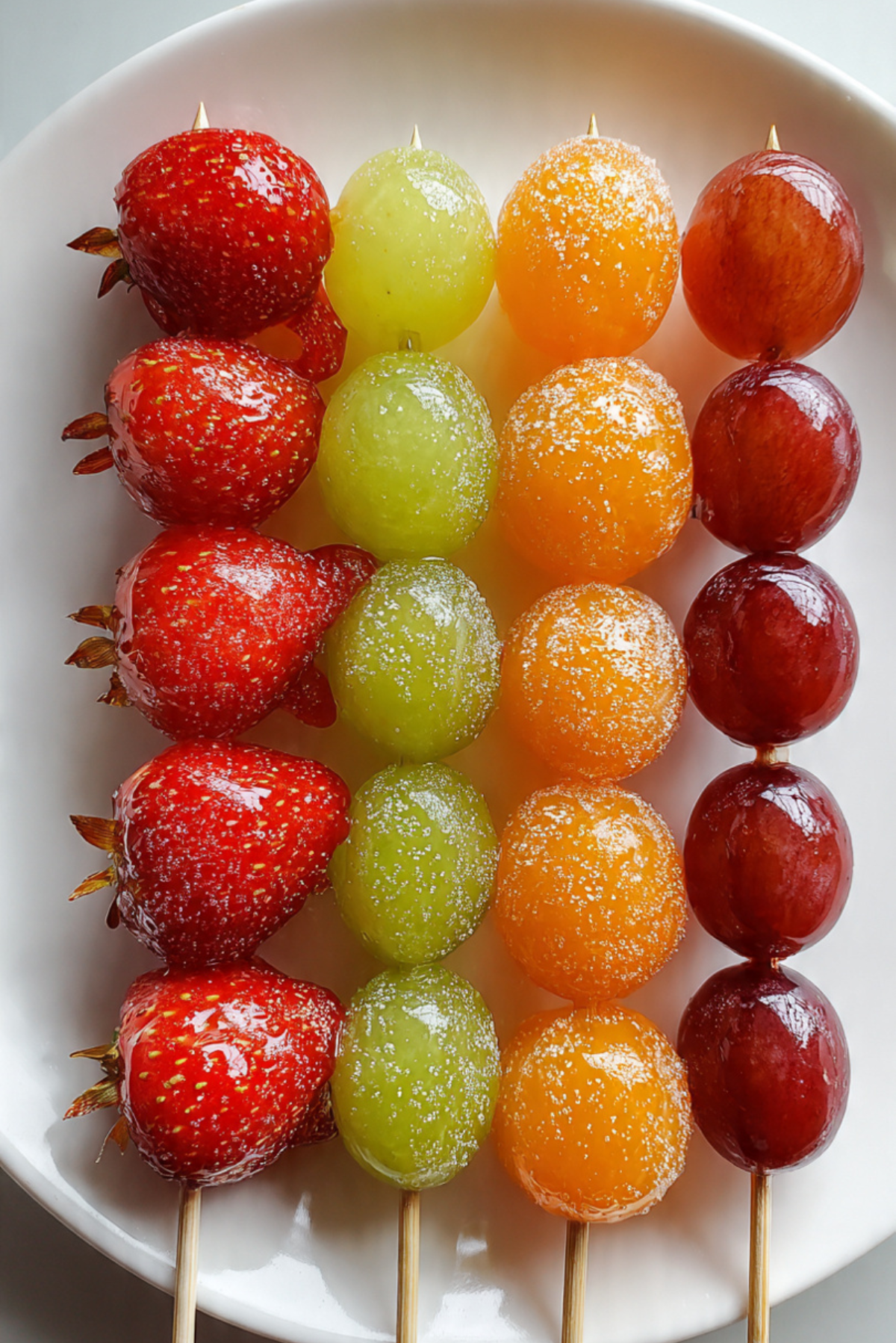
If you have ever walked through a bustling night market in China, you might have seen rows of shiny fruit skewers sparkling under bright lights. That beautiful glass like coating is the magic of Chinese candied fruit, a treat that looks almost too pretty to eat. Each skewer holds fresh fruit wrapped in a crisp sugar shell that cracks gently when you take a bite.
The experience is both crunchy and juicy at the same time. First comes the crisp candy layer, then the fresh sweetness of fruit bursting through. It is simple, colorful, and incredibly satisfying. Trust me, you’re going to love this. The combination of glossy sugar and bright fruit turns an everyday ingredient into something that feels festive and special.
And now that the sweet sparkle of these fruit skewers has caught your attention, let’s explore what makes them so iconic.
A Sweet Street Treat That Captures Attention
Chinese candied fruit is loved not only for its flavor but also for its stunning appearance. The sugar coating becomes clear and glossy, creating a shiny shell that looks like glass wrapped around the fruit.
When several pieces are stacked on a skewer, the result is a dessert that looks almost like edible jewels. The candy layer gives a satisfying crack when bitten, while the fruit inside remains fresh and juicy.
This simple contrast between crunchy sugar and vibrant fruit is exactly why the treat continues to attract people of all ages.
And now that we appreciate its charm, let’s look at the cultural story behind it.
The Cultural Roots of Tanghulu
This treat is commonly known as Tanghulu, a traditional snack that originated in northern China many centuries ago. Historically, hawthorn berries were used because their natural tartness balanced perfectly with the sweet sugar coating.
Over time, the idea expanded and vendors began using many different fruits such as strawberries, grapes, and small citrus fruits. Today Tanghulu can be found in night markets and street stalls where rows of glossy fruit skewers shine under market lights.
The tradition remains popular because the recipe is beautifully simple and easy to recreate at home.
And now that we know its story, let’s talk about why this recipe works so well.
Why This Recipe Is So Fun to Make
This recipe is simple yet impressive.
Versatile: Many fruits work beautifully with the candy coating.
Budget-Friendly: Only a few ingredients are required.
Quick and Easy: The candy coating forms in minutes.
Customizable: Different fruits create colorful variations.
Crowd-Pleasing: The crunchy sugar shell is always a hit.
Make-Ahead Friendly: The skewers can be prepared shortly before serving.
Great for Leftovers: Extra fruit can easily be used for another batch.
Now that we understand its appeal, let’s talk about a few helpful tips for success.
Expert Tips for Perfect Candy Coating
Working with sugar requires a little attention, but the results are worth it.
Use dry fruit so the sugar coating sticks properly.
Cook the sugar syrup until it becomes clear and slightly golden.
Dip the fruit quickly so the coating stays thin and glossy.
Allow the skewers to cool on parchment paper so they do not stick.
With those tips in mind, let’s gather the tools needed for the recipe.
Kitchen Tools That Make the Process Easier
Preparing these candied fruit skewers requires only a few basic tools.
Saucepan: Used for heating the sugar syrup.
Wooden Skewers: Hold the fruit pieces together.
Parchment Paper: Prevents sticking as the candy hardens.
Candy Thermometer: Helps monitor the sugar temperature.
Now let’s look at the ingredients that make this treat possible.
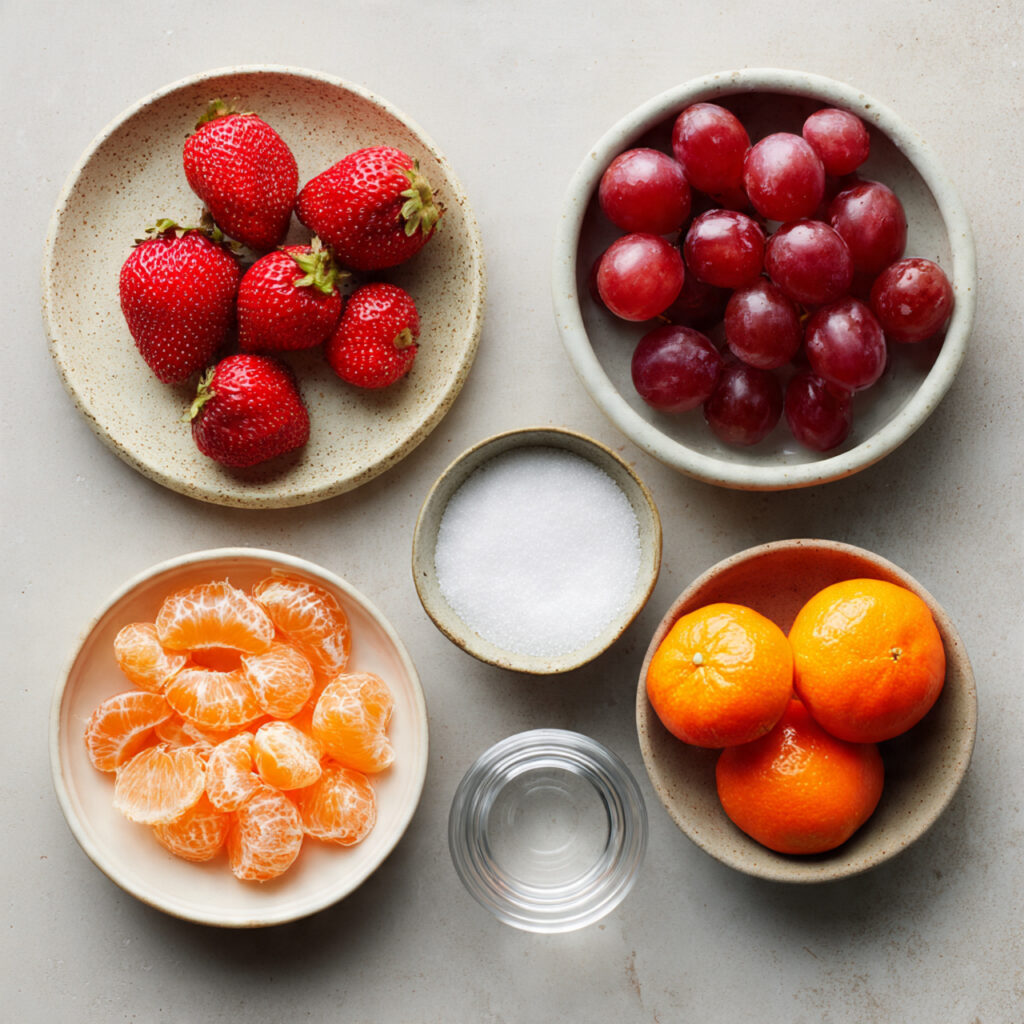
Ingredients That Create the Crunchy Candy Shell
The ingredient list is wonderfully short and simple.
- Strawberries: 8 large strawberries. Provide sweetness and vibrant color.
- Grapes: 12 seedless grapes. Add juicy bursts of flavor.
- Small Mandarins: 2 peeled and separated into segments. Bring bright citrus sweetness.
- Granulated Sugar: 1 cup. Creates the crisp candy coating.
- Water: 1/2 cup. Helps dissolve the sugar and create syrup.
Now that we have the ingredients ready, let’s explore a few substitution ideas.
Fruit Variations You Can Try
Different fruits create exciting new versions.
Strawberries: Raspberries or cherries can work well.
Grapes: Blueberries provide a smaller bite sized option.
Mandarins: Pineapple chunks add tropical flavor.
Now let’s highlight the element that truly defines this dessert.
The Key Element Behind the Crunch
Sugar Syrup: When heated properly, sugar transforms into a glossy candy shell that hardens around the fruit. This thin crunchy layer creates the signature crack that makes this treat so satisfying.
And now it is time to create the candy coated fruit.
Let’s Make These Shiny Fruit Skewers
Here are the steps you are going to follow.
- Preheat Your Equipment: Line a baking sheet with parchment paper.
- Combine Ingredients: Thread strawberries, grapes, and mandarin segments onto wooden skewers.
- Prepare Your Cooking Vessel: In a saucepan combine sugar and water.
- Assemble the Dish: Heat the mixture over medium heat until the sugar dissolves and forms a clear syrup.
- Cook to Perfection: Continue heating until the syrup reaches about 300°F and forms a hard crack stage.
- Finishing Touches: Dip each fruit skewer quickly into the syrup so the fruit becomes coated.
- Serve and Enjoy: Place the skewers on parchment paper and allow the candy shell to harden before serving.
Now let’s talk about the texture and flavor experience.
A Perfect Balance of Crunch and Freshness
The first bite gives a delicate crack as the sugar shell breaks. Immediately after, the juicy fruit inside releases its natural sweetness.
The contrast between crisp candy and fresh fruit creates a delightful balance of textures and flavors that makes every bite exciting.
Let me tell you, it is worth every bite.
Helpful Tips for Success
- Dry fruit thoroughly before dipping.
- Work quickly while the syrup is hot.
- Use parchment paper so the candy shell does not stick.
What to Avoid
- Avoid dipping fruit with moisture on the surface.
- Avoid overheating the sugar which can cause bitterness.
- Avoid thick candy layers which can become too hard.
Nutrition Facts
Servings: 6 skewers
Calories per serving: 120
Note: These are approximate values.
Preparation Time
Prep Time: 10 minutes
Cook Time: 10 minutes
Total Time: 20 minutes
Make Ahead and Storage Tips
Candied fruit is best enjoyed shortly after it is made because the sugar shell stays crisp. If stored for too long, moisture from the fruit may soften the candy coating.
If you need to prepare them ahead, keep them in a cool dry place and avoid refrigeration which can create condensation.
How to Serve
Serve the skewers on a simple plate so the glossy candy shell catches the light. The bright colors of the fruit make the presentation vibrant and festive.
They are perfect for parties, dessert tables, or fun homemade treats.
Creative Leftover Transformations
Extra fruit can easily become something new.
Add it to fruit salads.
Blend it into smoothies.
Use it as toppings for yogurt bowls.
Additional Tips
Use firm fruit so it holds well on skewers.
Work carefully when handling hot sugar syrup.
Prepare everything in advance before heating the sugar.
Make It a Showstopper
Arrange the skewers upright in a tall glass or jar so the glossy fruit shines like edible decorations. The colorful candy coated fruit creates a stunning display.
Variations to Try
Mixed Berry Version
Use strawberries, blueberries, and raspberries.
Tropical Fruit Version
Use pineapple, mango, and kiwi pieces.
Citrus Version
Use mandarin and orange segments.
Mini Fruit Version
Use small grapes and berries for bite sized treats.
Rainbow Fruit Version
Mix different fruits to create colorful skewers.
FAQ’s
Q1: What fruit is traditionally used?
Hawthorn berries were traditionally used in China.
Q2: Can I use different fruits?
Yes, many fruits work well for candied skewers.
Q3: Do I need a thermometer?
It helps ensure the syrup reaches the correct stage.
Q4: Why did my candy turn sticky?
Moisture from fruit or humidity can soften the coating.
Q5: Can I store them overnight?
They are best eaten the same day.
Q6: Can I make them without skewers?
Yes, fruit pieces can be dipped individually.
Q7: Why is the sugar not hardening?
The syrup may not have reached the hard crack stage.
Q8: Can I add food coloring?
Yes, it can create colorful candy shells.
Q9: Are they very sweet?
The fruit helps balance the sweetness.
Q10: Can children help make them?
They can help prepare fruit, but adults should handle the hot sugar.
Conclusion
Chinese candied fruit is one of those delightful treats that turns simple ingredients into something magical. The shiny candy shell, the vibrant fruit colors, and the satisfying crunchy bite make it a memorable dessert experience.
Once you try making these glossy fruit skewers at home, you might find yourself bringing a little piece of night market magic into your own kitchen.
Print
Chinese Candied Fruit
- Prep Time: 10 minutes
- Cook Time: 10 minutes
- Total Time: 20 minutes
- Yield: 6 skewers 1x
- Category: Dessert
- Method: Candy Coating
- Cuisine: Chinese
- Diet: Vegetarian
Description
Chinese candied fruit, also known as Tanghulu, features fresh fruit skewers coated in a thin glossy sugar shell that creates a crisp candy crunch.
Ingredients
- 8 large strawberries
- 12 seedless grapes
- 2 small mandarins, peeled and separated
- 1 cup granulated sugar
- 1/2 cup water
Instructions
- Wash and thoroughly dry all fruit.
- Thread strawberries, grapes, and mandarin segments onto wooden skewers.
- Line a baking sheet with parchment paper.
- In a saucepan combine sugar and water.
- Heat over medium heat until the sugar dissolves and the syrup becomes clear.
- Continue heating until the syrup reaches about 300°F and reaches the hard crack stage.
- Dip each fruit skewer quickly into the syrup to coat.
- Place the skewers on parchment paper and allow the candy shell to harden before serving.
Notes
- Fruit must be completely dry before dipping.
- Work quickly because the sugar hardens fast.
- Use parchment paper to prevent sticking.
Nutrition
- Serving Size: 1 skewer
- Calories: 120
- Sugar: 18g
- Sodium: 5mg
- Fat: 0g
- Saturated Fat: 0g
- Unsaturated Fat: 0g
- Trans Fat: 0g
- Carbohydrates: 30g
- Fiber: 1g
- Protein: 0g
- Cholesterol: 0mg