
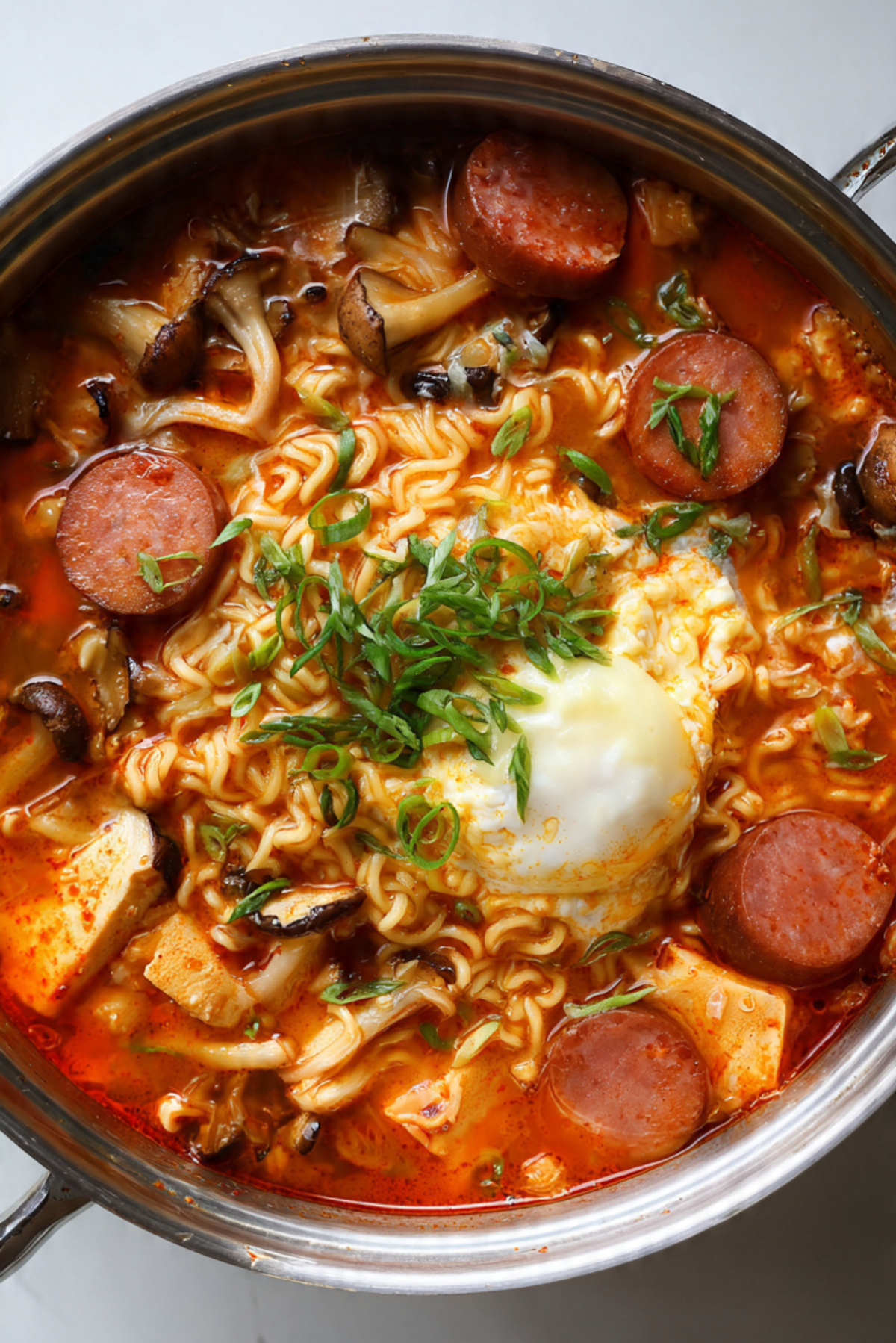
There’s something incredibly comforting about a pot of stew bubbling away on the stove, filling the air with savory aromas and anticipation. Korean Army Stew, also known as Budae Jjigae, is one of those dishes that brings people together with its spicy, hearty, and irresistibly bold personality. Imagine a rich broth infused with gochujang, packed with instant noodles, tofu, sausages, and bubbling cheese, all in one glorious pot. Trust me, once you dip your spoon in, you won’t want to stop.
Behind the Recipe
This stew has a special place in my heart. I first had it on a chilly evening at a little eatery tucked away in a Seoul alley, where the warmth of the pot seemed to melt away the cold and the jet lag. Since then, it has become one of my go-to comfort foods. It’s one of those meals you make when you want to surprise your taste buds and warm your soul at the same time. Whether you’re cooking for family or hosting a fun dinner with friends, Budae Jjigae always delivers.
Recipe Origin or Trivia
Korean Army Stew came to life in the aftermath of the Korean War. Food was scarce, and locals began mixing traditional Korean ingredients with surplus American army rations like sausages, canned beans, and processed cheese. The result? A beautiful fusion of flavors that’s both resourceful and delicious. Over the years, it evolved into a popular dish enjoyed in Korean households and restaurants alike, loved for its spicy, savory, and utterly addictive profile.
Why You’ll Love Korean Army Base Stew
This dish has more going for it than just its bold flavors.
Versatile: You can mix and match proteins and veggies based on what you have on hand.
Budget-Friendly: Most of the ingredients are pantry staples or affordable supermarket finds.
Quick and Easy: Comes together in one pot with minimal fuss.
Customizable: Adjust the spice, change the noodles, or add your favorite toppings.
Crowd-Pleasing: Everyone loves building their own bowl from a shared bubbling pot.
Make-Ahead Friendly: Prep the ingredients earlier and just heat and serve.
Great for Leftovers: The broth only gets richer the next day.
Chef’s Pro Tips for Perfect Results
For a stew that hits all the right notes, keep these in mind:
- Use high-quality sausages for deeper flavor and a better texture.
- Let the broth simmer a bit before adding noodles so the base becomes rich and flavorful.
- Add cheese at the end for that perfect melt—don’t stir it in too early.
- Use Korean instant ramen if possible for a more authentic bite.
- Garnish with scallions and sesame seeds for that fresh, toasty touch.
Kitchen Tools You’ll Need
This recipe doesn’t require fancy gadgets, just a few basics:
Large Pot or Shallow Hotpot: For cooking and serving the stew right at the table.
Cutting Board & Knife: To prep your meats and veggies.
Ladle or Serving Spoon: To scoop generous servings into bowls.
Tongs: Handy for grabbing noodles and stir-ins.
Bowls & Chopsticks/Spoons: For serving individual portions.
Ingredients in Korean Army Base Stew
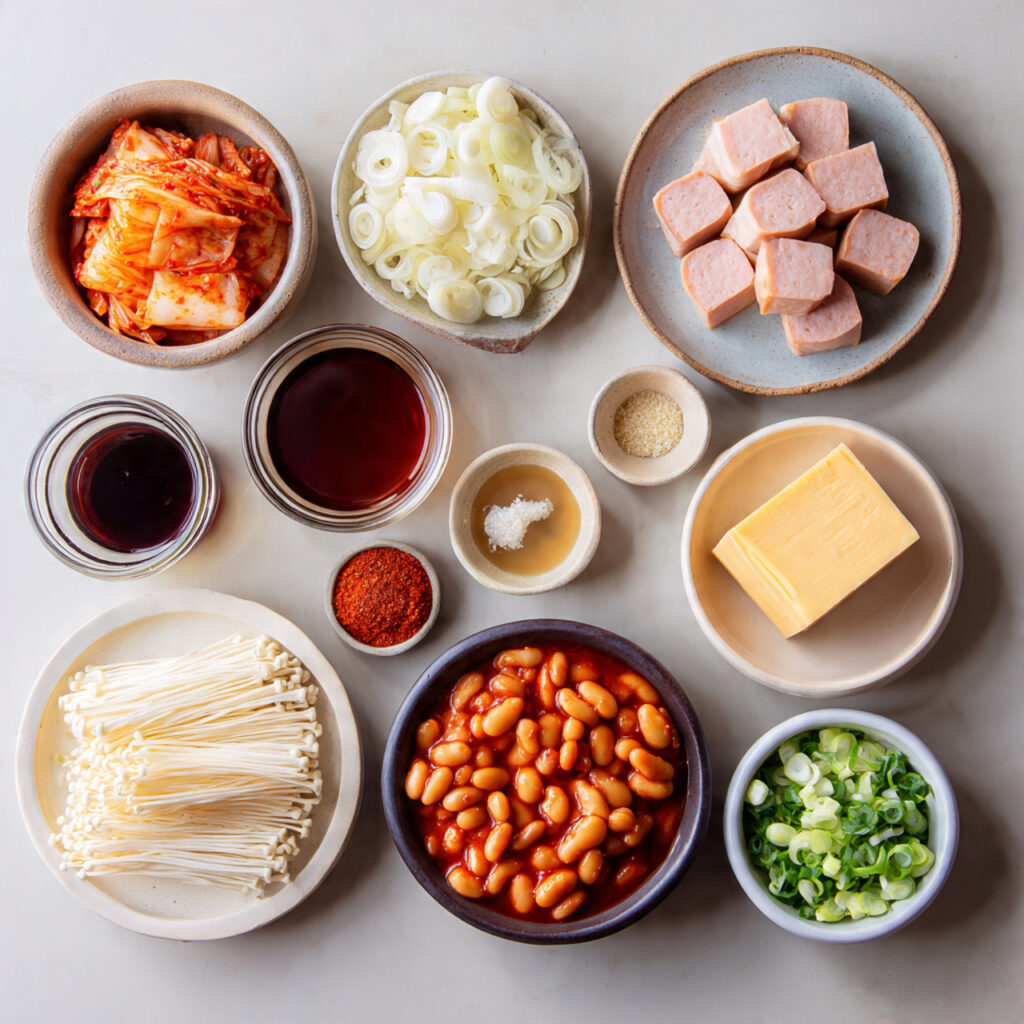
This dish is all about the harmony of textures and bold flavors. Here’s what you’ll need:
- Kimchi: 1 cup, fermented and chopped. Adds a tangy and spicy base flavor.
- Gochujang (Korean chili paste): 2 tablespoons. Deepens the heat and adds sweetness.
- Gochugaru (Korean chili flakes): 1 tablespoon. Enhances the spice and color.
- Garlic: 4 cloves, minced. Brings sharpness and depth.
- Soy Sauce: 2 tablespoons. For a salty umami kick.
- Sugar: 1 teaspoon. Balances out the heat.
- Chicken Broth or Water: 4 cups. Forms the hearty stew base.
- Tofu: 1 block, firm, sliced. Softens the texture and soaks in flavor.
- Sausages: 2–3 links, sliced. Adds a smoky, savory taste.
- Spam or Cooked Ham: 1 cup, cubed. Salty, satisfying protein.
- Rice Cakes (Tteok): 1 cup. Chewy bites that absorb the broth.
- Ramen Noodles: 1 pack. Essential for that slurp-worthy finish.
- Enoki Mushrooms: 1 bunch, trimmed. Delicate and earthy.
- Cheddar or American Cheese: 1 slice. Melts over the top for a creamy surprise.
- Green Onions: 2 stalks, chopped. For garnish and crunch.
- Baked Beans (optional): ½ cup. A nod to the stew’s American army roots.
Ingredient Substitutions
Feel free to play around with these ingredient swaps:
Tofu: Try tempeh or paneer for a different texture.
Spam: Use cooked chicken or even chickpeas for a healthier option.
Gochujang: Mix miso with hot sauce if you’re in a pinch.
Ramen Noodles: Any instant noodles or even udon will work.
Kimchi: Sauerkraut with chili flakes is a decent emergency fix.
Ingredient Spotlight
Gochujang: This fermented chili paste is the soul of many Korean dishes. It’s spicy, slightly sweet, and full of umami.
Kimchi: More than just fermented cabbage, it brings a complex sour heat that brightens the entire stew.
Instructions for Making Korean Army Base Stew
This one-pot wonder is as fun to make as it is to eat. Here’s how to bring it all together:
-
Preheat Your Equipment:
Set your pot on medium heat and get your broth ready to warm. -
Combine Ingredients:
In a bowl, mix gochujang, gochugaru, soy sauce, garlic, sugar, and a splash of broth to create a paste. -
Prepare Your Cooking Vessel:
Layer kimchi, sausages, spam, tofu, mushrooms, and rice cakes in the pot. Pour in the broth and spice paste. -
Assemble the Dish:
Bring the mixture to a boil, then reduce to a simmer. Let it bubble for 10–15 minutes. -
Cook to Perfection:
Add the ramen noodles and let them cook until tender, about 3–4 minutes. -
Finishing Touches:
Top with a slice of cheese and sprinkle chopped green onions. Let cheese melt slightly before serving. -
Serve and Enjoy:
Ladle into bowls and enjoy hot with a side of steamed rice or more kimchi.
Texture & Flavor Secrets
This stew is all about contrast. The chewy rice cakes and noodles play off the soft tofu. The tangy kimchi cuts through the rich sausage and cheese. And the broth? Spicy, salty, umami-packed, and just a bit creamy from the melted cheese. Every bite brings a new flavor combination.
Cooking Tips & Tricks
Get the most out of your stew with these helpful hints:
- Don’t overcook the noodles. Add them at the last minute.
- Stir occasionally to keep cheese from sticking or clumping.
- Add extra broth if things get too thick or salty.
- A dash of sesame oil before serving can add a rich nutty note.
What to Avoid
These common mistakes can dull the flavor—here’s how to avoid them:
- Using raw meat: Always use pre-cooked meats to keep cooking time short and safe.
- Adding cheese too early: It will dissolve and disappear into the broth.
- Over-salting: With ingredients like soy sauce, spam, and cheese, taste first before adding more salt.
- Crowding the pot: Keep ingredients balanced so everything cooks evenly.
Nutrition Facts
Servings: 4
Calories per serving: 530
Note: These are approximate values.
Preparation Time
Prep Time: 15 minutes
Cook Time: 25 minutes
Total Time: 40 minutes
Make-Ahead and Storage Tips
Budae Jjigae tastes even better the next day. Prep your ingredients ahead and store them in airtight containers. Once cooked, leftovers keep in the fridge for up to 3 days. Reheat gently on the stove and add a splash of broth if needed. This dish can also be frozen, though the texture of tofu and rice cakes may change slightly.
How to Serve Korean Army Base Stew
Bring the pot straight to the table and serve it hot and bubbling. Pair it with steamed rice, extra kimchi, or even a fried egg on top. If you’re hosting, let guests scoop their favorite bits into bowls. It’s communal, cozy, and so much fun.
Creative Leftover Transformations
Got leftovers? Here’s how to revive them:
- Budae Fried Rice: Chop everything up and stir-fry with rice and an egg.
- Spicy Ramen Soup: Add more broth and extra noodles for a next-day noodle bowl.
- Korean Quesadillas: Layer stew bits with cheese in a tortilla and grill until golden.
Additional Tips
- Slice ingredients evenly so they cook at the same pace.
- Don’t skip the cheese—it’s weirdly perfect in this dish.
- Taste the broth often and tweak to your liking.
Make It a Showstopper
Want to impress? Use a shallow, wide hotpot and arrange ingredients in sections like a clock face. Top with vibrant garnishes like sesame seeds, chili flakes, or even a raw egg yolk for that authentic Korean restaurant vibe.
Variations to Try
- Vegetarian Budae Jjigae: Use mushrooms, tofu, and plant-based sausages.
- Seafood Version: Add mussels, shrimp, or squid for a briny twist.
- Cheesy Deluxe: Add multiple types of cheese for gooey richness.
- Extra-Spicy: Double the gochugaru or add sliced chili peppers.
- Rice Cake-Free: Swap out tteok with extra noodles or dumplings.
FAQ’s
1. Can I make it less spicy?
Yes, reduce the gochujang and skip the gochugaru for a milder version.
2. What’s the best pot to use?
A shallow, wide hotpot or a large saucepan works perfectly.
3. Can I use fresh noodles instead of instant?
Definitely, just adjust the cook time accordingly.
4. Is it gluten-free?
Only if you use gluten-free soy sauce and noodles. Check labels carefully.
5. Can I use canned kimchi?
Fresh, homemade kimchi is best, but canned works in a pinch.
6. Do I need to rinse the rice cakes?
Yes, especially if they’ve been frozen or refrigerated to prevent sticking.
7. Can I cook this in a slow cooker?
Not recommended. Quick cooking keeps the noodles and toppings from getting mushy.
8. Is cheese necessary?
Not mandatory, but highly recommended for creamy richness.
9. Can I double the recipe?
Yes! Just make sure your pot is big enough.
10. What if I don’t have gochujang?
Use a combo of miso paste and chili sauce as a backup.
Conclusion
Korean Army Stew is more than just a meal. It’s a bold, fiery, soul-warming experience in a single bubbling pot. Whether you’re new to Korean cuisine or a longtime fan, this dish is guaranteed to spark joy around your table. So grab your ingredients, gather your people, and dig into a stew that’s rich in flavor and even richer in history.
Print
Korean Army Base Stew
- Prep Time: 15 minutes
- Cook Time: 25 minutes
- Total Time: 40 minutes
- Yield: 4 servings 1x
- Category: Main Course
- Method: Stovetop
- Cuisine: Korean
- Diet: Low Lactose
Description
Korean Army Stew, or Budae Jjigae, is a spicy, hearty fusion dish packed with kimchi, ramen noodles, sausages, tofu, and a rich gochujang-based broth. It’s a bold, comforting one-pot meal that’s perfect for sharing.
Ingredients
- 1 cup kimchi, chopped
- 2 tablespoons gochujang (Korean chili paste)
- 1 tablespoon gochugaru (Korean chili flakes)
- 4 cloves garlic, minced
- 2 tablespoons soy sauce
- 1 teaspoon sugar
- 4 cups chicken broth or water
- 1 block firm tofu, sliced
- 2–3 sausages, sliced
- 1 cup spam or cooked ham, cubed
- 1 cup Korean rice cakes (tteok)
- 1 pack ramen noodles
- 1 bunch enoki mushrooms, trimmed
- 1 slice cheddar or American cheese
- 2 stalks green onions, chopped
- ½ cup baked beans (optional)
Instructions
- Set your pot over medium heat and prepare your broth.
- In a small bowl, combine gochujang, gochugaru, soy sauce, garlic, sugar, and a bit of broth to form a spice paste.
- Layer kimchi, sausages, spam, tofu, mushrooms, and rice cakes into the pot.
- Pour in the broth and spice paste, then bring to a boil. Reduce heat and simmer for 10–15 minutes.
- Add ramen noodles and cook for 3–4 minutes, until tender.
- Top with cheese slice and green onions. Let the cheese melt slightly before serving.
- Serve hot straight from the pot with rice or extra kimchi on the side.
Notes
- Add extra broth if the stew becomes too thick during cooking.
- Use Korean ramen for a more authentic flavor and texture.
- Don’t add the cheese too early or it will disappear into the broth.
- A dash of sesame oil before serving adds a nutty depth.
Nutrition
- Serving Size: 1 bowl
- Calories: 530
- Sugar: 5g
- Sodium: 1600mg
- Fat: 30g
- Saturated Fat: 11g
- Unsaturated Fat: 15g
- Trans Fat: 0g
- Carbohydrates: 45g
- Fiber: 4g
- Protein: 22g
- Cholesterol: 65mg