
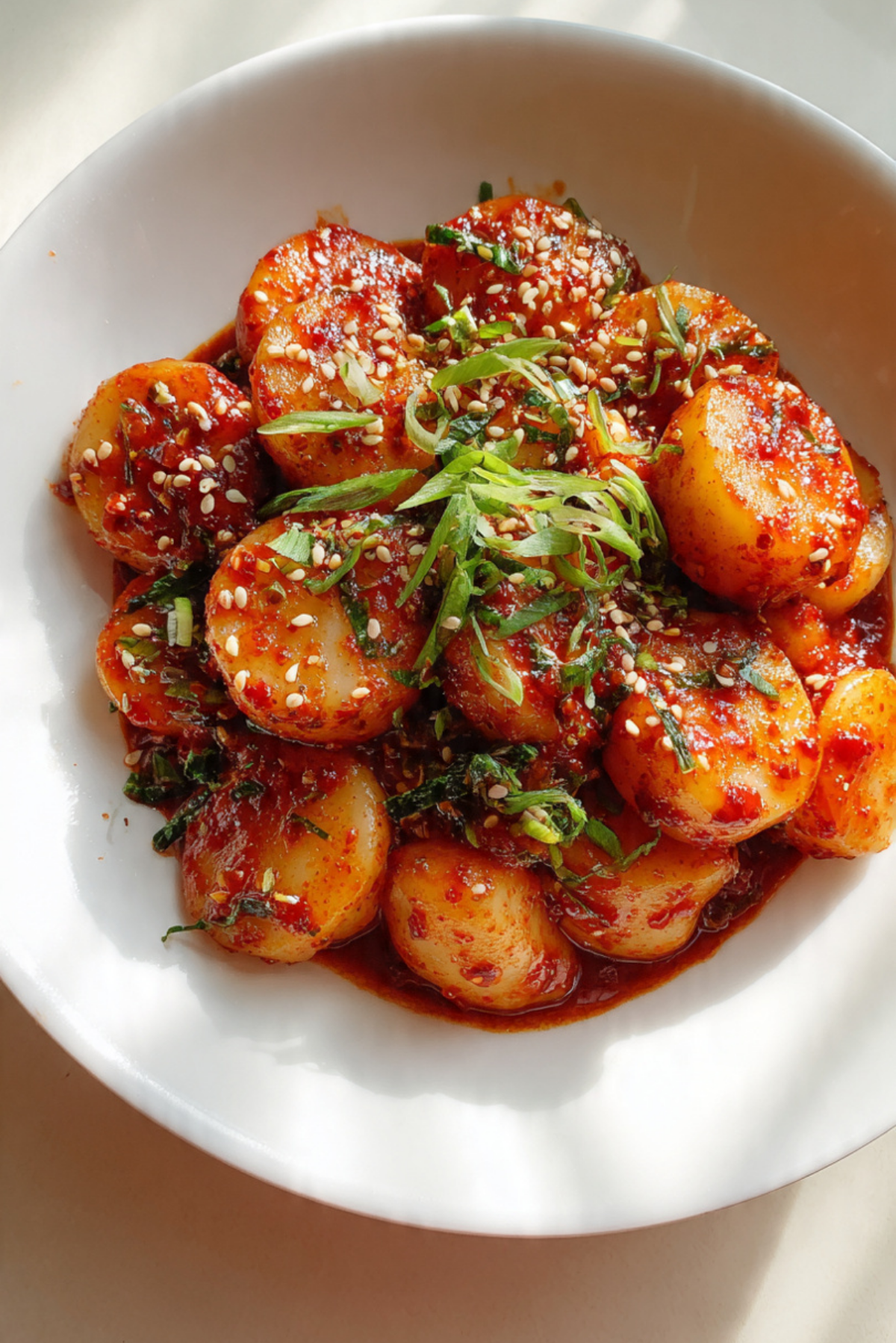
Soft, chewy, and drenched in a bold red sauce that’s as fiery as it is flavorful, Korean Cylinder Rice Cakes are the ultimate comfort food with a kick. From the first bite, you’re greeted with a satisfying texture that gives just the right resistance, followed by a wave of sweet, spicy, and savory flavors that warm you from the inside out. Whether you’re familiar with Korean street food or just dipping your toes in, this dish is the kind of recipe that speaks to the soul.
Behind the Recipe
I remember the first time I had Korean rice cakes — standing at a tiny street vendor cart in Seoul on a chilly evening. The steam from the simmering sauce filled the air, and the vendor handed me a cup of these glossy, saucy rice cakes. That first bite was magic. Ever since, I’ve been trying to recreate that nostalgic taste, bringing a bit of that cozy street corner into my own kitchen. This recipe is as close as it gets, with its bold gochujang kick and addictive chewiness.
Recipe Origin or Trivia
These rice cakes, known as Tteokbokki in Korea, have been a staple of Korean cuisine for centuries. Originally a royal court dish made without spice, the modern version as we know it today gained popularity in the 1950s with the addition of gochujang, a fermented chili paste. Over time, this fiery version became a beloved street food, often found bubbling away in large pans across markets and city corners. It’s not just food — it’s a symbol of togetherness and comfort.
Why You’ll Love Korean Cylinder Rice Cakes
Let me tell you, this one’s a total game-changer. It’s bold, comforting, and wildly addictive.
Versatile: Add fish cakes, boiled eggs, ramen noodles, or veggies for a full meal.
Budget-Friendly: Made with pantry staples and simple ingredients, it’s easy on the wallet.
Quick and Easy: You’ll go from pantry to plate in under 30 minutes.
Customizable: Spice level, sweetness, or add-ins — you make it your own.
Crowd-Pleasing: Spicy, sweet, and savory all in one — it’s a guaranteed hit.
Make-Ahead Friendly: You can prep the sauce ahead to make weeknight cooking even easier.
Great for Leftovers: Reheat it with a splash of water, and it’s just as tasty the next day.
Chef’s Pro Tips for Perfect Results
To really nail this dish, a few tricks go a long way:
- Soak the rice cakes in warm water if they’re refrigerated or frozen to soften before cooking.
- Use anchovy stock or kelp broth for an authentic umami boost.
- Simmer gently — too much heat can break the rice cakes.
- Stir constantly to prevent sticking and ensure the sauce clings to every piece.
- Garnish with scallions and sesame seeds for that perfect finishing touch.
Kitchen Tools You’ll Need
All you need is a handful of kitchen basics:
Large Skillet or Shallow Pan: To simmer everything evenly.
Wooden Spoon or Silicone Spatula: For stirring gently without breaking the rice cakes.
Small Mixing Bowl: For blending the sauce before adding.
Tongs: Handy for tossing and serving the sticky rice cakes.
Ingredients in Korean Cylinder Rice Cakes
This dish is all about harmony — spicy, savory, slightly sweet, and deeply comforting.
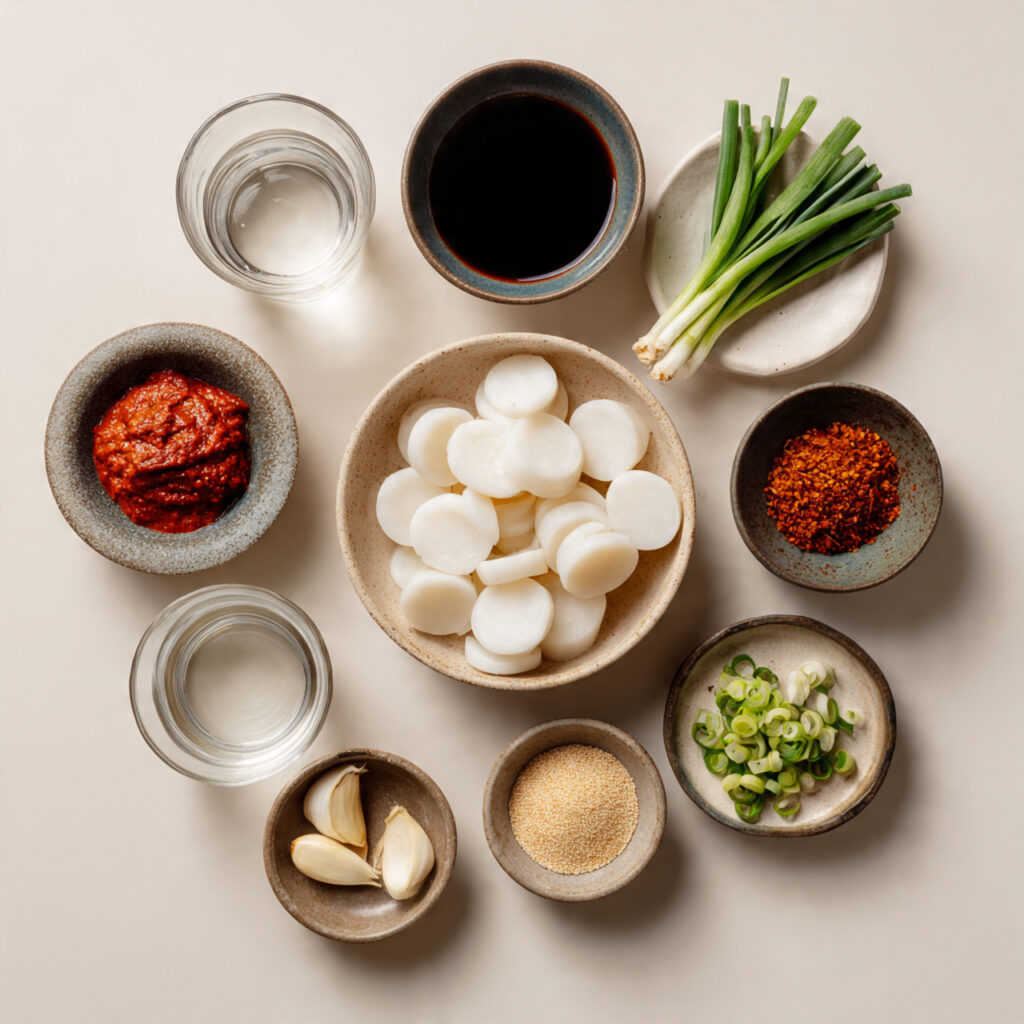
- Korean Cylinder Rice Cakes (Tteok): 1 pound. The star of the show, delightfully chewy and satisfying.
- Gochujang (Korean Chili Paste): 2 tablespoons. Brings that iconic spicy-sweet heat.
- Gochugaru (Korean Chili Flakes): 1 tablespoon. Adds depth and an extra kick.
- Soy Sauce: 2 tablespoons. Balances the sweetness with a salty, umami edge.
- Sugar: 1 tablespoon. Rounds out the heat with a subtle sweetness.
- Garlic (minced): 2 cloves. Adds that aromatic punch.
- Water or Anchovy Broth: 2 cups. Helps the sauce simmer and penetrate the rice cakes.
- Green Onions: 2, sliced. For freshness and a pop of color.
- Toasted Sesame Seeds: 1 teaspoon. A nutty finishing sprinkle.
Ingredient Substitutions
Making this your own is easy with a few simple swaps:
Gochujang: Thai chili paste or Sriracha in a pinch.
Gochugaru: Crushed red pepper flakes, but use sparingly.
Soy Sauce: Tamari or coconut aminos for a gluten-free option.
Sugar: Honey or maple syrup for a natural alternative.
Anchovy Broth: Use vegetable broth if preferred.
Ingredient Spotlight
Gochujang: This thick, fermented chili paste is what gives Tteokbokki its iconic spicy depth and a hint of sweetness.
Korean Rice Cakes (Tteok): Made from glutinous rice flour, these dense cylinders are chewy, soft, and oh-so-satisfying when simmered in sauce.
Instructions for Making Korean Cylinder Rice Cakes
Ready to dive in? Here’s how to bring this delicious Korean comfort dish to life.
-
Preheat Your Equipment:
Warm your skillet or pan over medium heat. No need to oil it — the sauce will do the work. -
Combine Ingredients:
In a small bowl, mix together gochujang, gochugaru, soy sauce, sugar, and minced garlic until smooth. -
Prepare Your Cooking Vessel:
Pour the water or broth into the pan and stir in the sauce mixture. Bring it to a gentle boil. -
Assemble the Dish:
Add the rice cakes to the simmering sauce. Make sure they’re fully submerged for even cooking. -
Cook to Perfection:
Let the rice cakes simmer for 10–12 minutes, stirring occasionally. The sauce should thicken and coat the rice cakes beautifully. -
Finishing Touches:
Add sliced green onions and a sprinkle of sesame seeds. Give it one final stir. -
Serve and Enjoy:
Serve piping hot, ideally in a shallow bowl to cradle all that glossy, spicy goodness.
Texture & Flavor Secrets
This dish is all about contrast. The rice cakes are chewy and tender, while the sauce is thick, spicy, and rich. That slight stickiness from the rice cakes clings to the bold, umami-packed sauce, giving every bite an intense burst of flavor. Fresh scallions cut through the heat with a bright crunch.
Cooking Tips & Tricks
A few extra tips to get it just right:
- Don’t skip the broth — it builds the dish’s base flavor.
- Add a boiled egg for extra protein and richness.
- Want it creamier? Stir in a small spoon of butter or a splash of cream at the end.
What to Avoid
Here’s how to steer clear of common mistakes:
- Overcooking the rice cakes — they’ll turn mushy.
- Using cold rice cakes straight from the fridge — soak them in warm water first.
- Skimping on gochujang — it’s the heart of the flavor.
Nutrition Facts
Servings: 4
Calories per serving: 310
Note: These are approximate values.
Preparation Time
Prep Time: 10 minutes
Cook Time: 15 minutes
Total Time: 25 minutes
Make-Ahead and Storage Tips
You can totally make the sauce ahead and keep it in the fridge for up to a week. Cooked rice cakes store well too — just cool them fully, then refrigerate for up to 3 days. Reheat gently in a pan with a splash of water. For longer storage, freeze the rice cakes separately and thaw before cooking.
How to Serve Korean Cylinder Rice Cakes
Serve hot and fresh, topped with more scallions or a drizzle of sesame oil. Pair it with a side of pickled radish or a light cucumber salad to cut the heat. For a heartier meal, add a boiled egg, ramen noodles, or sautéed veggies.
Creative Leftover Transformations
Here’s how to breathe new life into leftovers:
- Tteokbokki Fried Rice: Chop up leftovers and stir-fry with rice and an egg.
- Spicy Rice Cake Soup: Add broth, tofu, and greens for a hearty soup.
- Tteokbokki Gratin: Layer in a baking dish with cheese, bake until bubbly.
Additional Tips
- If you love extra heat, add a dash of Korean chili oil.
- Use non-stick pans to prevent sauce from sticking and burning.
- Let it rest a minute before serving — the sauce thickens as it cools slightly.
Make It a Showstopper
Presentation matters. Use a shallow white dish to showcase the vibrant red sauce. Garnish with bright green onions, sesame seeds, or even a touch of microgreens. Keep the sides minimal to let the dish shine.
Variations to Try
- Cheese Tteokbokki: Melt mozzarella over the top for extra indulgence.
- Seafood Tteokbokki: Add shrimp or squid for a briny twist.
- Vegan Tteokbokki: Use veggie broth and skip eggs or fish cakes.
- Creamy Tteokbokki: Add milk or cream for a fusion-style version.
- Ramen-Tteokbokki Fusion: Toss in cooked ramen for double the carbs and flavor.
FAQ’s
Q1: Can I use frozen rice cakes?
Yes, just soak them in warm water for 10–15 minutes to soften before cooking.
Q2: Is it very spicy?
It has a kick, but you can adjust gochugaru and gochujang to control the heat.
Q3: Can I add other proteins?
Absolutely. Fish cakes, boiled eggs, tofu, or even shrimp work great.
Q4: How long does it keep?
Up to 3 days in the fridge. Reheat with a splash of water.
Q5: Can I make it gluten-free?
Yes, use tamari instead of soy sauce and make sure your gochujang is gluten-free.
Q6: What’s the best pan to use?
A wide skillet or shallow pan helps everything cook evenly and absorb flavor.
Q7: Can I skip the sugar?
You can reduce it, but a bit of sweetness balances the heat.
Q8: Is it okay to double the recipe?
Totally. Just use a large enough pan and stir well to avoid sticking.
Q9: What if my sauce is too thick?
Add a bit more water or broth until you reach your desired consistency.
Q10: Can kids eat this?
If they can handle mild spice, yes. You can reduce the gochujang and chili flakes for a milder version.
Conclusion
Whether you’re craving something bold, comforting, or just irresistibly chewy, Korean Cylinder Rice Cakes deliver every single time. It’s a dish that brings people together — at the table, in the kitchen, or even just over a bowl in front of your favorite show. Trust me, you’re going to love this one. Grab your chopsticks or spoon and dig into something seriously satisfying.
Print
Korean Cylinder Rice Cakes
- Prep Time: 10 minutes
- Cook Time: 15 minutes
- Total Time: 25 minutes
- Yield: 4 servings 1x
- Category: Main Dish
- Method: Stovetop Simmer
- Cuisine: Korean
- Diet: Vegetarian
Description
Chewy Korean cylinder rice cakes simmered in a rich, spicy-sweet gochujang sauce and topped with fresh scallions and sesame seeds for the ultimate comforting street food experience.
Ingredients
- 1 pound Korean Cylinder Rice Cakes (Tteok)
- 2 tablespoons Gochujang (Korean Chili Paste)
- 1 tablespoon Gochugaru (Korean Chili Flakes)
- 2 tablespoons Soy Sauce
- 1 tablespoon Sugar
- 2 cloves Garlic, minced
- 2 cups Water or Anchovy Broth
- 2 Green Onions, sliced
- 1 teaspoon Toasted Sesame Seeds
Instructions
- Preheat Your Equipment: Warm your skillet or pan over medium heat.
- Combine Ingredients: In a bowl, mix gochujang, gochugaru, soy sauce, sugar, and garlic until smooth.
- Prepare Your Cooking Vessel: Pour water or broth into the pan and stir in the sauce mixture. Bring to a gentle boil.
- Assemble the Dish: Add rice cakes to the simmering sauce and ensure they are fully submerged.
- Cook to Perfection: Simmer for 10–12 minutes, stirring occasionally, until sauce thickens and coats the rice cakes.
- Finishing Touches: Add green onions and sesame seeds. Stir to combine.
- Serve and Enjoy: Serve hot in shallow bowls and enjoy immediately.
Notes
- Soak refrigerated or frozen rice cakes in warm water to soften before cooking.
- Use anchovy broth for traditional Korean flavor depth.
- Add fish cakes, boiled egg, or veggies for variation.
Nutrition
- Serving Size: 1 bowl
- Calories: 310
- Sugar: 6g
- Sodium: 720mg
- Fat: 2g
- Saturated Fat: 0.3g
- Unsaturated Fat: 1.7g
- Trans Fat: 0g
- Carbohydrates: 65g
- Fiber: 2g
- Protein: 6g
- Cholesterol: 0mg