

Soft, airy, and gently savory, Korean steamed eggs — or Gyeran-jjim — are the kind of comfort food that feels like a warm hug in a bowl. Served bubbling hot in a stone pot, this fluffy egg custard is a staple in Korean home cooking, often accompanying meals as a soothing side dish. It’s delicate yet deeply satisfying, and once you master it, you’ll want to make it again and again.
The Cozy Origin of This Fluffy Favorite
I first tried Gyeran-jjim in a tiny restaurant tucked in a Seoul alley, where the server placed a steaming stone bowl on the table with a soft “be careful, it’s hot.” The surface of the eggs was puffed and golden, gently jiggling as it settled. I took one spoonful and was hooked. The simplicity, the warmth, the way it practically melted in my mouth — it was unlike any egg dish I had ever tasted. Since then, I’ve recreated it countless times at home, and every batch feels just as comforting.
A Dish Rooted in Tradition
Korean steamed eggs, or Gyeran-jjim (계란찜), are a common banchan, or side dish, in Korean cuisine. Though simple, they hold a special place at the table, often served with rice, grilled meats, or soups. Traditionally cooked in a ttukbaegi (Korean stone pot), the eggs are beaten with water or broth, gently steamed until fluffy, and topped with green onions or sesame seeds. It’s a dish built on technique, timing, and care — and the reward is a cloud-like custard full of flavor.
Why This Dish Deserves a Spot on Your Table
There’s something magical about watching the eggs puff up in the pot. And the best part? It’s unbelievably easy. Here’s why you’ll fall in love with it:
Versatile: Serve as a side, a light breakfast, or even a snack.
Budget-Friendly: Just eggs, water, and a few pantry staples.
Quick and Easy: Ready in under 15 minutes from start to finish.
Customizable: Add shrimp, cheese, or veggies for variation.
Crowd-Pleasing: Universally loved, even by picky eaters.
Make-Ahead Friendly: Mix the ingredients in advance and steam when ready.
Great for Leftovers: Reheat gently and enjoy the next day.
My Go-To Tips for the Perfect Puff
Steamed eggs may be simple, but these little tweaks make all the difference:
- Use warm water or broth for a smoother texture.
- Beat the eggs well, but don’t overdo it — you want them unified, not foamy.
- Steam gently on low heat to avoid bubbling or curdling.
- Cover the pot to trap steam and create a soufflé-like rise.
- Garnish right before serving for a fresh finish.
Simple Tools, Big Comfort
You don’t need much to make Gyeran-jjim, but these essentials help you do it right:
Ttukbaegi (Korean stone pot): Maintains even heat and serves as the cooking and serving vessel.
Small Pot or Saucepan: Works well if you don’t have a stone bowl.
Whisk or Fork: To beat the eggs until fully blended.
Measuring Cup: For precise water-to-egg ratio.
Lid or Foil: To cover during steaming and trap heat.
Spoon: For gentle stirring and serving.
What You’ll Need for That Iconic Texture
Each ingredient here plays a role in creating that soft, custardy texture and mild, savory flavor.
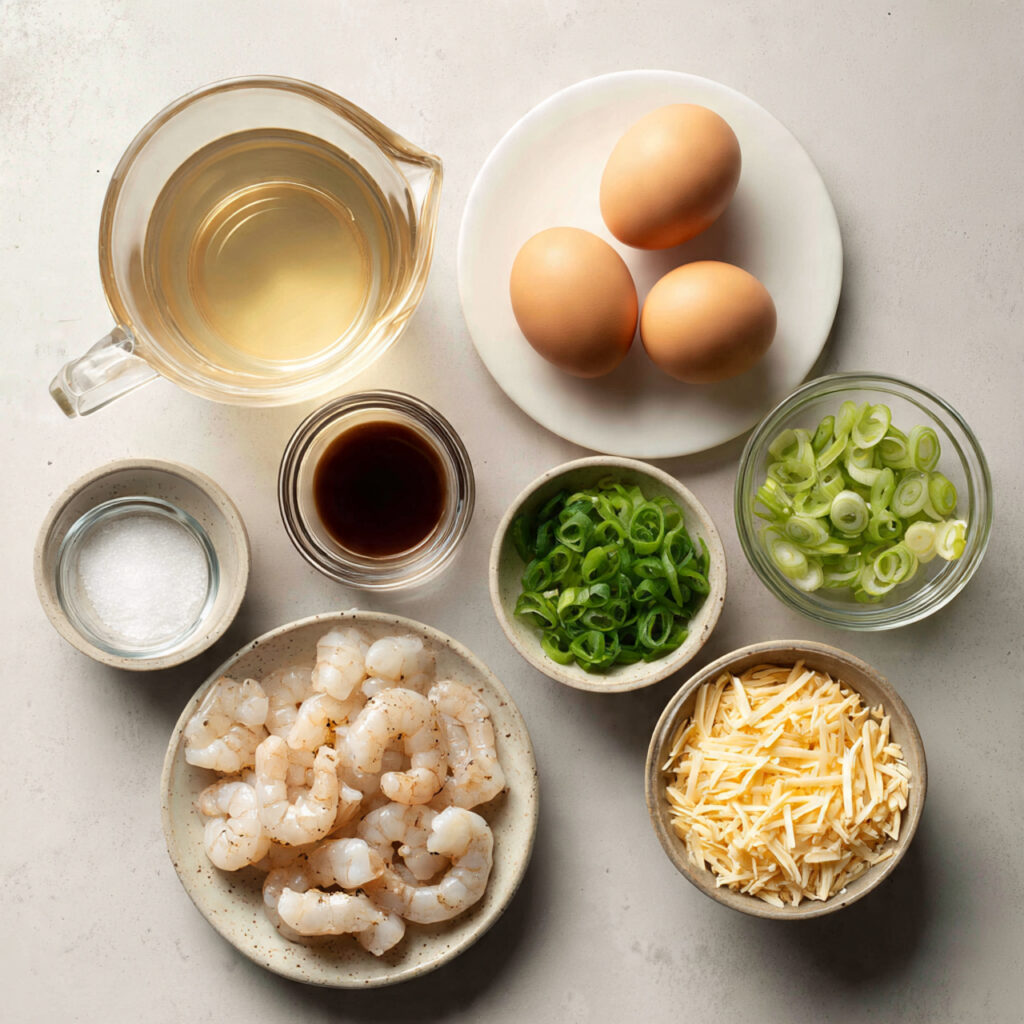
- Eggs: 3 large. The main body of the dish, rich in protein and naturally fluffy.
- Warm water or broth: ¾ cup. Thins the eggs for steaming and adds subtle flavor.
- Salt: ¼ teaspoon. Enhances the taste without overpowering.
- Sesame oil: ½ teaspoon. Adds a nutty aroma and finish.
- Green onions: 1 stalk, thinly sliced. For color and a fresh bite.
- Optional add-ins: Minced garlic, diced shrimp, chopped mushrooms, or cheese.
Ingredient Substitutions That Still Work
Here’s how to tweak the dish based on what you have on hand:
Warm water: Use anchovy, chicken, or vegetable broth for added depth.
Green onions: Replace with chives or omit if you prefer plain.
Sesame oil: Swap for olive oil or skip entirely.
Salt: Soy sauce or fish sauce can be used for a different umami twist.
Spotlight on Key Ingredients
Eggs: Fresh eggs are the base — soft, fluffy, and delicate when steamed properly.
Warm Broth: Using broth instead of water infuses the dish with deeper umami flavor without overpowering it.
Step-by-Step to Cloud-Like Eggs
Let’s walk through the method that turns eggs and broth into something truly comforting.
- Preheat Your Equipment: If using a stone pot, place it over low heat for a few minutes to warm up.
- Combine Ingredients: Crack eggs into a bowl, add salt and warm water or broth. Beat gently until fully mixed.
- Prepare Your Cooking Vessel: Pour the mixture into your stone pot or a small saucepan.
- Assemble the Dish: Place over medium-low heat. Stir slowly and gently for the first 2–3 minutes to keep the texture smooth.
- Cook to Perfection: Cover the pot with a lid or foil. Let it steam gently for 7–10 minutes until the eggs are set and slightly puffed.
- Finishing Touches: Drizzle with sesame oil and sprinkle with green onions.
- Serve and Enjoy: Serve immediately while hot and jiggly — it pairs perfectly with rice and kimchi.
The Texture and Flavor You’ll Love
What makes Korean steamed eggs so special is their soft, almost soufflé-like consistency. The texture is light, airy, and slightly jiggly with each spoonful melting in your mouth. The flavor is gentle and savory, with hints of nutty sesame and the freshness of green onion.
Helpful Cooking Tips to Level It Up
These tiny tweaks can elevate your Gyeran-jjim from good to perfect:
- Use a 1:1.5 egg-to-liquid ratio for ideal fluffiness.
- Avoid high heat — gentle steam is key.
- Stir early in cooking for a uniform custard, then let it set untouched.
- Garnish last to keep colors fresh and textures crisp.
Avoid These Common Mistakes
Simple errors can change the outcome. Here’s what to watch for:
- Overbeating eggs: Makes them airy and leads to a collapsed texture.
- Boiling too hard: Causes bubbling and curdled texture.
- Undercooking: The center should jiggle but not be runny.
Nutrition Facts
Servings: 2
Calories per serving: 130
Note: These are approximate values.
How Long Does It Take?
Prep Time: 5 minutes
Cook Time: 10 minutes
Total Time: 15 minutes
Make Ahead & Reheat Tips
You can prep the egg mixture ahead and refrigerate it for a few hours. Steam just before serving. Leftovers can be gently reheated on the stove or in the microwave — just cover to retain moisture.
How to Serve It Beautifully
Serve Gyeran-jjim straight in the stone pot or transfer it to a small bowl. Garnish with extra green onions or sesame seeds. It pairs beautifully with rice, grilled meats, or a bowl of kimchi stew.
Creative Uses for Leftovers
Turn extra Gyeran-jjim into:
- A breakfast sandwich filler
- A side to stir into rice porridge
- A topping for a warm noodle bowl
Extra Tips for Success
- Use fresh eggs for the best puff and texture.
- Warm your pot to avoid sudden temperature shifts.
- Add soft cheese like mozzarella for a fusion twist.
Presentation Tips That Impress
The dish is naturally beautiful when served hot and jiggly in a black stone pot. Garnish with bright green onions or a swirl of sesame oil for a golden sheen. Keep the presentation clean and focused on texture.
Fun Variations You’ll Want to Try
- Seafood Version: Add small shrimp or crab meat to the egg mixture.
- Kimchi Style: Stir in finely chopped kimchi for tangy heat.
- Cheese Twist: Top with grated cheese before steaming for melty richness.
- Mushroom Magic: Mix in chopped shiitake or enoki mushrooms.
- Herb Infused: Add fresh parsley or chives for a fresh twist.
FAQ’s
Q1: Can I make this without a stone pot?
Yes, use a small saucepan with a lid for similar results.
Q2: Can I microwave it?
Yes! Microwave in a deep bowl for 3–4 minutes, watching closely.
Q3: What if my eggs don’t puff?
It may be the heat — try a gentler steam and ensure your lid fits well.
Q4: Can I make it dairy-free?
Absolutely — there’s no dairy in the base recipe.
Q5: How long does it last in the fridge?
Up to 2 days. Reheat gently before serving.
Q6: Is it gluten-free?
Yes, just check your broth or soy sauce if used.
Q7: Can I make a larger batch?
Yes, double the ingredients and use a larger pot.
Q8: Is this suitable for kids?
Totally — it’s soft, mild, and nourishing.
Q9: Can I flavor it with soy sauce?
Yes, reduce salt slightly if doing so.
Q10: What goes well with it?
Serve alongside rice, grilled fish, or kimchi stew for a balanced meal.
Conclusion
Korean steamed eggs are proof that simplicity can be deeply satisfying. With just a few ingredients and a gentle touch, you get a dish that’s fluffy, warm, and full of quiet joy. Trust me, once you make Gyeran-jjim, it’ll become one of those recipes you return to again and again.
Print
Korean Steamed Eggs
- Prep Time: 5 minutes
- Cook Time: 10 minutes
- Total Time: 15 minutes
- Yield: 2 servings 1x
- Category: Side Dish
- Method: Steaming
- Cuisine: Korean
Description
Fluffy, savory Korean steamed eggs (Gyeran-jjim) made with eggs, warm broth, and a touch of sesame oil. This comforting side dish is light, airy, and ready in minutes.
Ingredients
- 3 large eggs
- 3/4 cup warm water or broth
- 1/4 teaspoon salt
- 1/2 teaspoon sesame oil
- 1 stalk green onion, thinly sliced
- Optional: minced garlic, diced shrimp, chopped mushrooms, or shredded cheese
Instructions
- In a bowl, crack the eggs and add salt and warm water or broth.
- Whisk gently until fully combined and smooth.
- Pour the egg mixture into a preheated stone pot or small saucepan over medium-low heat.
- Stir gently for 2–3 minutes, then cover with a lid or foil.
- Steam for 7–10 minutes until the eggs are set and slightly puffed.
- Drizzle with sesame oil and garnish with sliced green onions.
- Serve hot, straight from the pot or bowl.
Notes
- Use broth instead of water for extra flavor.
- Stirring early helps create a smoother custard texture.
- Keep the heat low to prevent curdling.
Nutrition
- Serving Size: 1 bowl
- Calories: 130
- Sugar: 1g
- Sodium: 260mg
- Fat: 10g
- Saturated Fat: 2g
- Unsaturated Fat: 6g
- Trans Fat: 0g
- Carbohydrates: 2g
- Fiber: 0g
- Protein: 9g
- Cholesterol: 210mg