
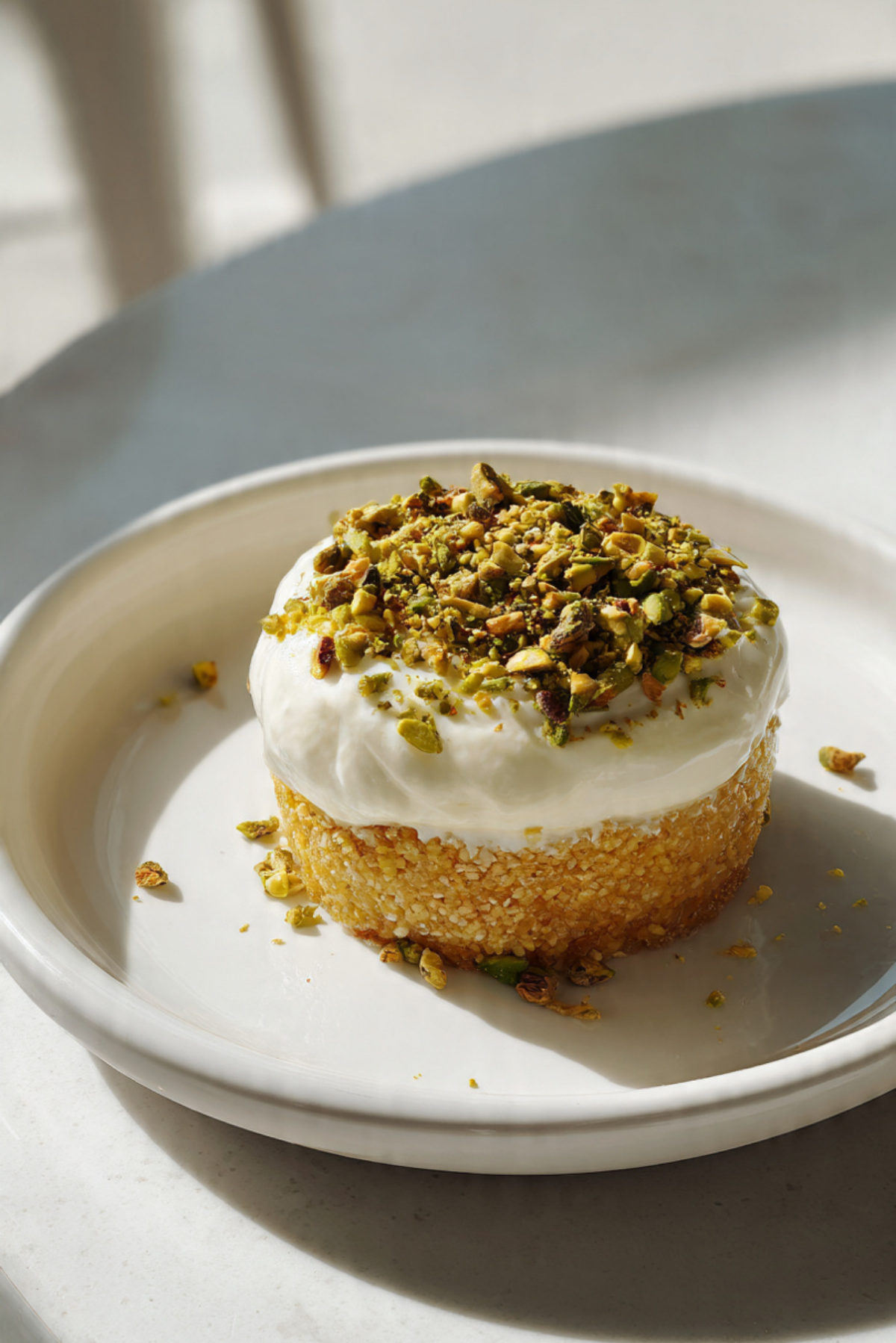
There’s something truly special about desserts that bring both elegance and comfort in one spoonful, and Mafroukeh is exactly that. Rich, creamy, nutty, and fragrant, this traditional Middle Eastern treat is a layered delight that combines buttery semolina with clotted cream and crushed pistachios. It’s indulgent, but not overwhelming. Sweet, but balanced. And every bite feels like a celebration of heritage and flavor.
Behind the Recipe
The first time I tasted Mafroukeh, I remember the contrast of textures hitting me all at once — the warm, slightly grainy semolina base melting into a cloud of creamy ashta, with that bold crunch of pistachios rounding everything out. It was at a friend’s Eid gathering, where trays of sweets were laid out like art. Among them, this dessert stood tall and proud. From that day, I knew I had to learn how to make it myself — and let me tell you, it’s easier than it looks, and just as rewarding.
Recipe Origin or Trivia
Mafroukeh hails from the Levant, particularly Lebanon and Syria, where it’s considered a festive and luxurious dessert. Traditionally served during Ramadan or on special occasions, it features semolina sautéed in butter or ghee, sweetened with sugar syrup, and topped with ashta (a clotted cream) and generous amounts of crushed pistachios. Its name comes from the Arabic root “f-r-k,” meaning to rub — referring to the way semolina is worked into the butter. Over time, this dish evolved from a street sweet into an elegant plated dessert.
Why You’ll Love Mafroukeh
This dessert may look fancy, but it’s pure comfort in disguise — and there’s a lot to love.
Versatile: Serve it in individual cups or molded into a stunning centerpiece.
Budget-Friendly: Made with basic ingredients like semolina, butter, and cream.
Quick and Easy: Comes together faster than most layered desserts.
Customizable: Adjust sweetness, swap nuts, or flavor the syrup differently.
Crowd-Pleasing: Its rich texture and nutty aroma win everyone over.
Make-Ahead Friendly: Prepares well in advance and keeps its flavor.
Great for Leftovers: Stores beautifully and gets even better the next day.
Chef’s Pro Tips for Perfect Results
A few thoughtful touches go a long way in creating that signature Mafroukeh texture.
- Use fine semolina: This gives a smoother base that blends well with the cream.
- Toast the semolina until golden: It brings out a deep, nutty flavor.
- Use homemade or high-quality ashta: The cream layer is key to balance.
- Flavor the syrup with rose or orange blossom water: Adds a subtle floral finish.
- Chill before serving: This helps the layers set and intensifies the flavors.
Kitchen Tools You’ll Need
Simple tools for a sophisticated dessert.
Saucepan: To cook semolina and prepare the syrup.
Mixing Bowl: For assembling your ashta or cream layer.
Spatula: For stirring the semolina and smoothing layers.
Mold or Ramekins: For shaping the dessert beautifully.
Measuring Cups and Spoons: To keep proportions just right.
Ingredients in Mafroukeh
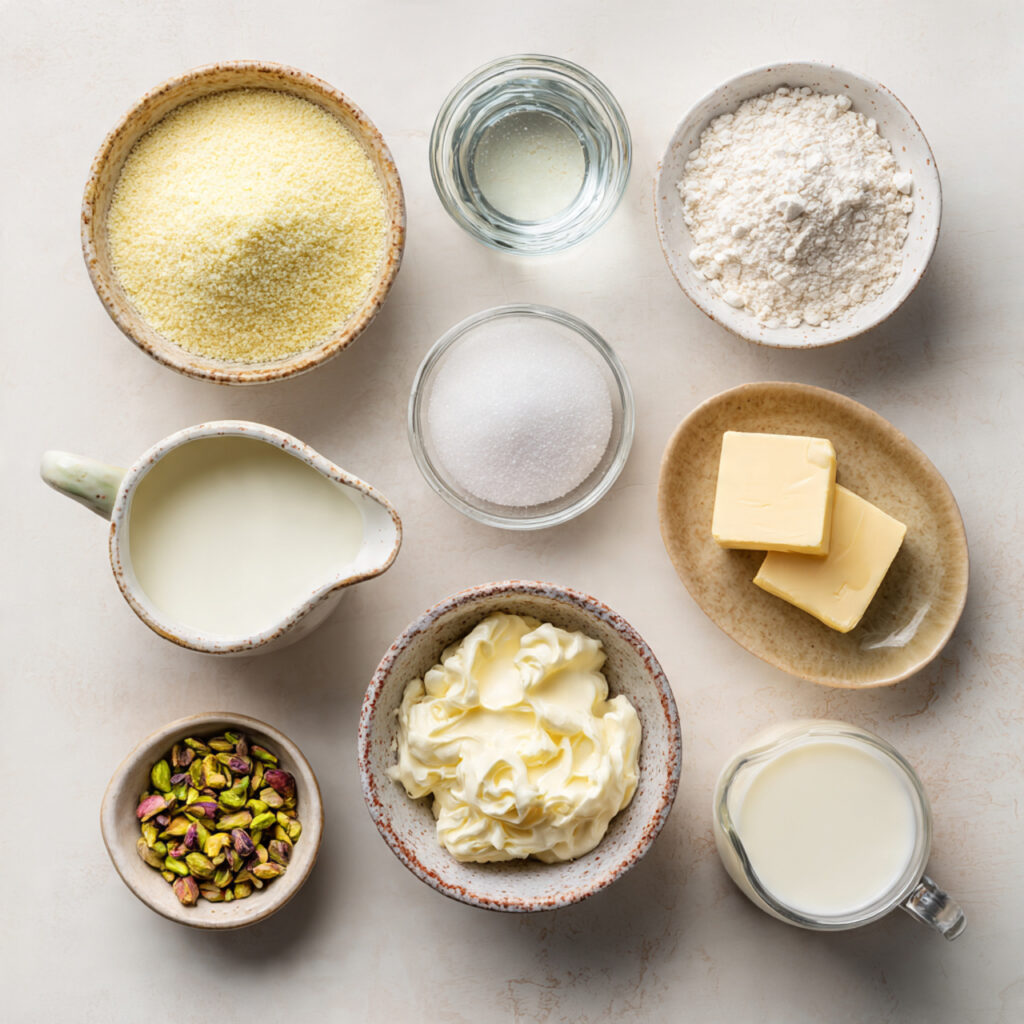
The ingredients are humble, but together they make something truly elegant.
- Fine Semolina: 1 cup. Forms the golden, buttery base of the dessert.
- Unsalted Butter or Ghee: ½ cup. Toasts the semolina and adds richness.
- Sugar: ¾ cup. Sweetens both the base and the syrup.
- Water: 1 cup. Used to make the sugar syrup.
- Rose Water or Orange Blossom Water: 1 teaspoon. Adds fragrant, floral notes.
- Clotted Cream (Ashta): 1 cup. The creamy middle layer that adds softness.
- Crushed Pistachios: ½ cup. Adds color, crunch, and nuttiness.
- Cornstarch: 2 tablespoons. Used in making homemade ashta for thickening.
- Milk: 1½ cups (for ashta). Base for a creamy, thick clotted cream.
Ingredient Substitutions
Making do with what you have? Here’s how to swap:
Semolina: Fine cornmeal can work in a pinch, though the texture will change slightly.
Butter or Ghee: Use coconut oil for a dairy-free version.
Ashta: Whipped mascarpone or ricotta with sugar and rose water makes a good substitute.
Pistachios: Swap for almonds or walnuts if needed.
Rose Water: Orange blossom water or vanilla can offer a different aroma.
Ingredient Spotlight
Semolina: This finely ground wheat product is the heart of Mafroukeh. When sautéed in butter and combined with syrup, it becomes soft, fragrant, and slightly nutty — the perfect contrast to the cream layer.
Clotted Cream (Ashta): Traditionally made by thickening milk with cornstarch and flavoring with rose or orange blossom water. It adds a luxurious smoothness that balances the graininess of the semolina.
Instructions for Making Mafroukeh
Now let’s build this beautiful dessert together, step by step.
-
Preheat Your Equipment:
No oven required! Just get your stovetop ready and have your molds or serving dishes set aside. -
Combine Ingredients:
In a saucepan over medium heat, melt the butter. Add semolina and cook, stirring constantly, until golden and fragrant (about 8–10 minutes). -
Prepare Your Cooking Vessel:
In a separate pot, combine water and sugar. Bring to a boil, simmer for 5 minutes, then stir in rose or orange blossom water. -
Assemble the Dish:
Slowly pour syrup into the toasted semolina, stirring as it thickens. Cook another 2–3 minutes until smooth. Press the mixture into molds or dishes and let cool. -
Cook to Perfection:
To make ashta, heat milk with cornstarch and stir until thickened. Cool slightly before layering over the semolina base. -
Finishing Touches:
Top the cream layer with crushed pistachios. Chill in the fridge for at least 1 hour. -
Serve and Enjoy:
Unmold onto plates or serve directly in ramekins. Serve cold or at room temp with extra pistachios on the side.
Texture & Flavor Secrets
Mafroukeh is all about balance — the buttery grain, the soft, milky cream, and the bright crunch of pistachios. The floral syrup adds fragrance without overwhelming. Served chilled, the textures become more defined: dense semolina, light cream, and crisp nuts.
Cooking Tips & Tricks
A few extra tips to elevate your Mafroukeh:
- Use a silicone mold for easy unmolding and perfect shapes.
- Let each layer cool slightly before adding the next to avoid melting.
- Don’t overboil the syrup — a light simmer is all you need.
- Garnish just before serving to keep pistachios fresh and crisp.
What to Avoid
Keep your Mafroukeh flawless by avoiding these common pitfalls:
- Overcooking the semolina: It becomes too dry and crumbly.
- Skipping syrup: The dessert relies on it for softness and sweetness.
- Too much rose water: A little goes a long way — too much can overpower.
Nutrition Facts
Servings: 6
Calories per serving: 310
Note: These are approximate values.
Preparation Time
Prep Time: 15 minutes
Cook Time: 15 minutes
Total Time: 30 minutes (plus chilling)
Make-Ahead and Storage Tips
Mafroukeh is a great dessert to prepare in advance. You can make it up to 2 days ahead and store it in the fridge, covered. The flavors deepen over time. Leftovers keep well for 3–4 days. Avoid freezing, as it changes the texture of the cream.
How to Serve Mafroukeh
Serve it cold, unmolded onto a plate or in clear dessert glasses to show off the layers. Top with extra crushed pistachios or even a drizzle of honey. It pairs beautifully with Arabic coffee or mint tea for a traditional touch.
Creative Leftover Transformations
If you somehow end up with leftovers, here are some tasty ideas:
- Layer with fruit for a Middle Eastern trifle.
- Spread into a tart shell and top with berries.
- Roll into balls, coat in nuts, and serve as mini bites.
Additional Tips
- Use full-fat milk for a creamier ashta.
- Press the semolina layer firmly into the mold for clean edges.
- Add a pinch of salt to the semolina for flavor depth.
Make It a Showstopper
Presentation is key — mold into domes or rings and garnish with pistachios and dried rose petals. A drizzle of syrup over the top just before serving adds shine and sweetness. Serve on a marble or gold-rimmed plate for that festive touch.
Variations to Try
- Date-Stuffed Mafroukeh: Add a layer of chopped dates between semolina and cream.
- Nut-Free Version: Use toasted coconut instead of pistachios.
- Chocolate Twist: Stir a spoon of cocoa into the semolina for a deeper flavor.
- Berry Topped: Add fresh raspberries or pomegranate seeds for color.
- Mini Mafroukeh Cups: Assemble in small glasses for individual servings.
FAQ’s
Q1: Can I make Mafroukeh ahead of time?
A1: Yes! It holds up well for up to 2 days in the fridge and tastes even better chilled.
Q2: Is it gluten-free?
A2: No, semolina contains gluten. Look for gluten-free semolina alternatives.
Q3: Can I skip the cream layer?
A3: You can, but it won’t be as rich or balanced. Consider adding yogurt as a lighter option.
Q4: What’s the difference between ashta and clotted cream?
A4: Ashta is lighter and made with milk and cornstarch. Clotted cream is thicker and more buttery.
Q5: Can I use store-bought ashta?
A5: Absolutely, but homemade has a fresher flavor.
Q6: Can I make this dairy-free?
A6: Use coconut milk for ashta and plant-based butter for the semolina.
Q7: Why is my semolina dry?
A7: It may have been overcooked or not enough syrup added.
Q8: Can I reheat Mafroukeh?
A8: It’s best served cold or room temp. Heating may affect the texture.
Q9: Can I flavor the syrup differently?
A9: Yes, try cinnamon, cardamom, or even a hint of lemon zest.
Q10: How do I prevent the layers from mixing?
A10: Let the semolina cool slightly before adding cream, and use a spatula to spread gently.
Conclusion
Mafroukeh is more than just a dessert — it’s a celebration of textures, aromas, and tradition. Whether you’re serving it during a holiday, preparing it for a loved one, or simply indulging in a sweet moment, this layered treat delivers something unforgettable. It’s rich, nostalgic, and always worth that extra spoonful.
Print
Mafroukeh
- Prep Time: 15 minutes
- Cook Time: 15 minutes
- Total Time: 30 minutes + chilling
- Yield: 6 servings 1x
- Category: Dessert
- Method: Stovetop
- Cuisine: Middle Eastern
- Diet: Vegetarian
Description
A rich and creamy Middle Eastern dessert made from buttery semolina, floral sugar syrup, velvety ashta cream, and a crown of crushed pistachios. Elegant, easy, and perfect for special occasions.
Ingredients
- 1 cup fine semolina
- 1/2 cup unsalted butter or ghee
- 3/4 cup sugar
- 1 cup water
- 1 teaspoon rose water or orange blossom water
- 1 cup clotted cream (ashta)
- 1/2 cup crushed pistachios
- 2 tablespoons cornstarch (for ashta)
- 1 1/2 cups full-fat milk (for ashta)
Instructions
- In a saucepan, melt butter over medium heat. Add semolina and cook for 8–10 minutes, stirring, until golden and fragrant.
- In a separate pot, combine sugar and water. Bring to a boil, simmer for 5 minutes, then stir in rose water. Set aside.
- Pour syrup slowly into the toasted semolina, stirring until thick and smooth. Cook for 2–3 more minutes. Press into serving molds or dishes and let cool.
- To make ashta, heat milk and cornstarch in a saucepan over medium heat, whisking until thickened. Cool slightly.
- Layer ashta over the semolina base. Smooth the surface with a spatula.
- Top with crushed pistachios. Chill for at least 1 hour before serving.
Notes
- Use fine semolina for a smooth base texture.
- Don’t overboil the syrup — a gentle simmer is enough.
- Let each layer cool slightly before adding the next to keep structure.
- Chill thoroughly to set and enhance flavors before serving.
Nutrition
- Serving Size: 1 portion
- Calories: 310
- Sugar: 22g
- Sodium: 55mg
- Fat: 18g
- Saturated Fat: 11g
- Unsaturated Fat: 6g
- Trans Fat: 0g
- Carbohydrates: 34g
- Fiber: 1g
- Protein: 5g
- Cholesterol: 45mg