
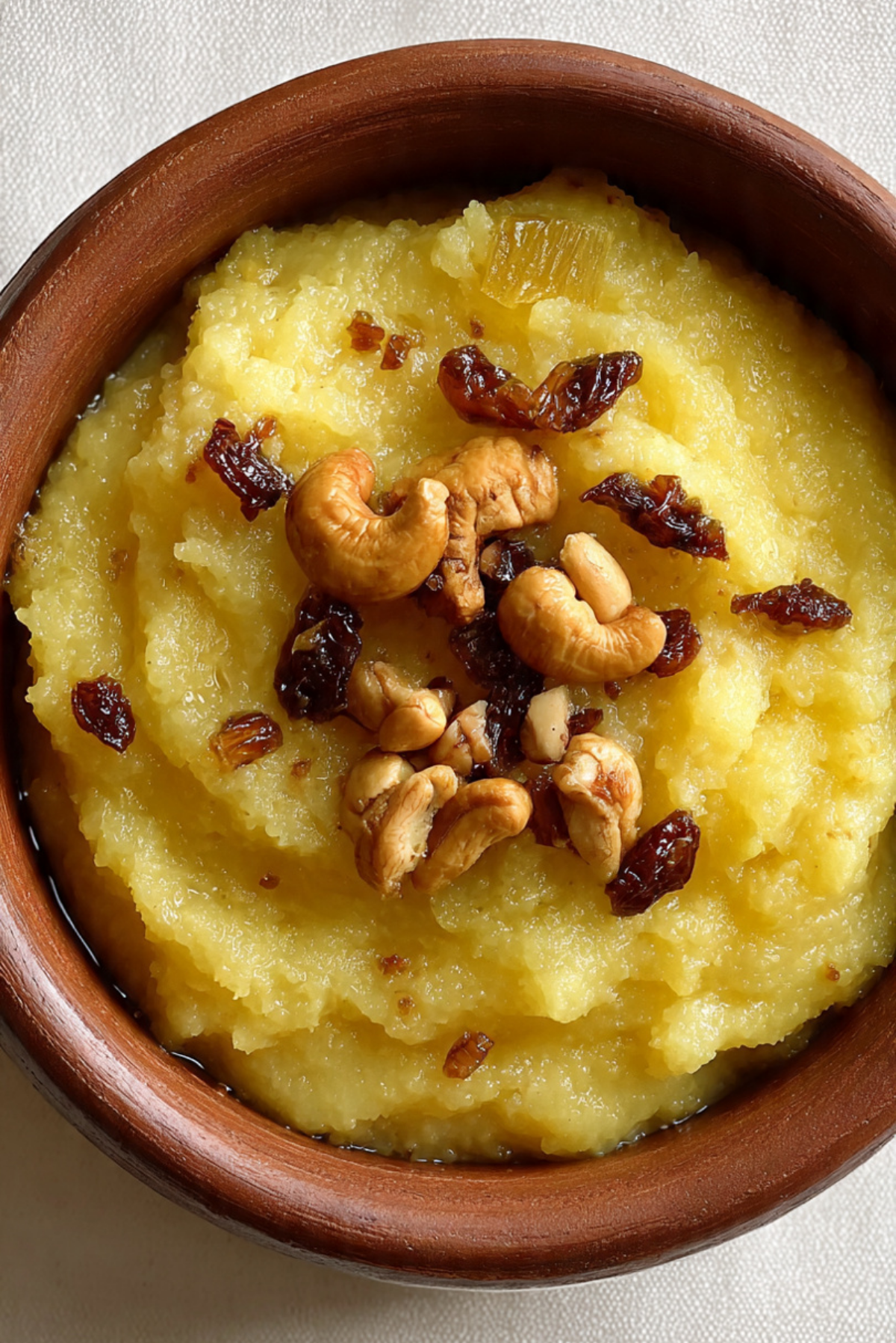
This pineapple halwa is pure tropical comfort in a bowl. Each spoonful is warm, fragrant, and melts in your mouth with bursts of juicy pineapple, the richness of ghee, and that nostalgic touch of toasted cashews and raisins. It’s vibrant, golden, and smells like celebration. Trust me, you’re going to love this one.
Behind the Recipe
Some desserts just wrap you in warmth the moment they begin bubbling on the stove, and pineapple halwa is one of those magical treats. I first learned this recipe during a festival season in southern India, where the aroma of caramelizing pineapple and cardamom filled the air. It quickly became a family favorite, especially when we craved something cozy, fruity, and festive without spending hours in the kitchen.
Recipe Origin or Trivia
Pineapple halwa, also known as pineapple kesari in some regions, has deep roots in South Indian cuisine. Traditionally served during religious festivals or special occasions, it’s a fruit-based twist on the classic sooji (semolina) halwa. The use of pineapple adds a unique tangy-sweet balance that lifts the otherwise rich and dense dessert. In Karnataka and Tamil Nadu, it’s often offered in temples or prepared during celebrations like Ugadi and Diwali.
Why You’ll Love Pineapple Halwa
Warm, golden, and bursting with flavor, this halwa checks every box for comfort and ease:
Versatile: Serve it as a festive sweet or a cozy after-dinner dessert. It fits in anywhere.
Budget-Friendly: Uses simple pantry staples like semolina, sugar, and fruit.
Quick and Easy: Comes together in under 30 minutes without fancy steps.
Customizable: Adjust sweetness, add nuts, or even toss in saffron or cardamom to suit your mood.
Crowd-Pleasing: A total hit at parties and potlucks. Everyone loves the sweet pineapple twist.
Make-Ahead Friendly: Stays fresh for a couple of days when refrigerated, just reheat gently.
Great for Leftovers: Still tastes amazing the next day—maybe even better.
Chef’s Pro Tips for Perfect Results
Want that halwa to turn out silky, not soggy? Here’s what works like magic every time:
- Toast the semolina until light golden: This adds a nutty aroma and prevents stickiness.
- Use fresh pineapple when possible: Canned works too, but fresh gives better flavor and texture.
- Boil the pineapple with sugar before adding semolina: It softens the fruit and intensifies its flavor.
- Add ghee gradually: This keeps it from feeling greasy and ensures it absorbs evenly.
- Finish with cardamom and roasted nuts: This step is key to getting that authentic halwa flavor.
Kitchen Tools You’ll Need
Nothing fancy needed. Just your everyday kitchen tools will do:
Heavy-Bottomed Pan: Prevents sticking and burning during roasting and cooking.
Wooden Spoon or Spatula: Ideal for mixing and prevents scratching the pan.
Small Frying Pan: For roasting the cashews and raisins in ghee.
Measuring Cups and Spoons: Precision makes a big difference in desserts.
Ingredients in Pineapple Halwa
This combination of ingredients brings balance, richness, and a pop of freshness to the dish:
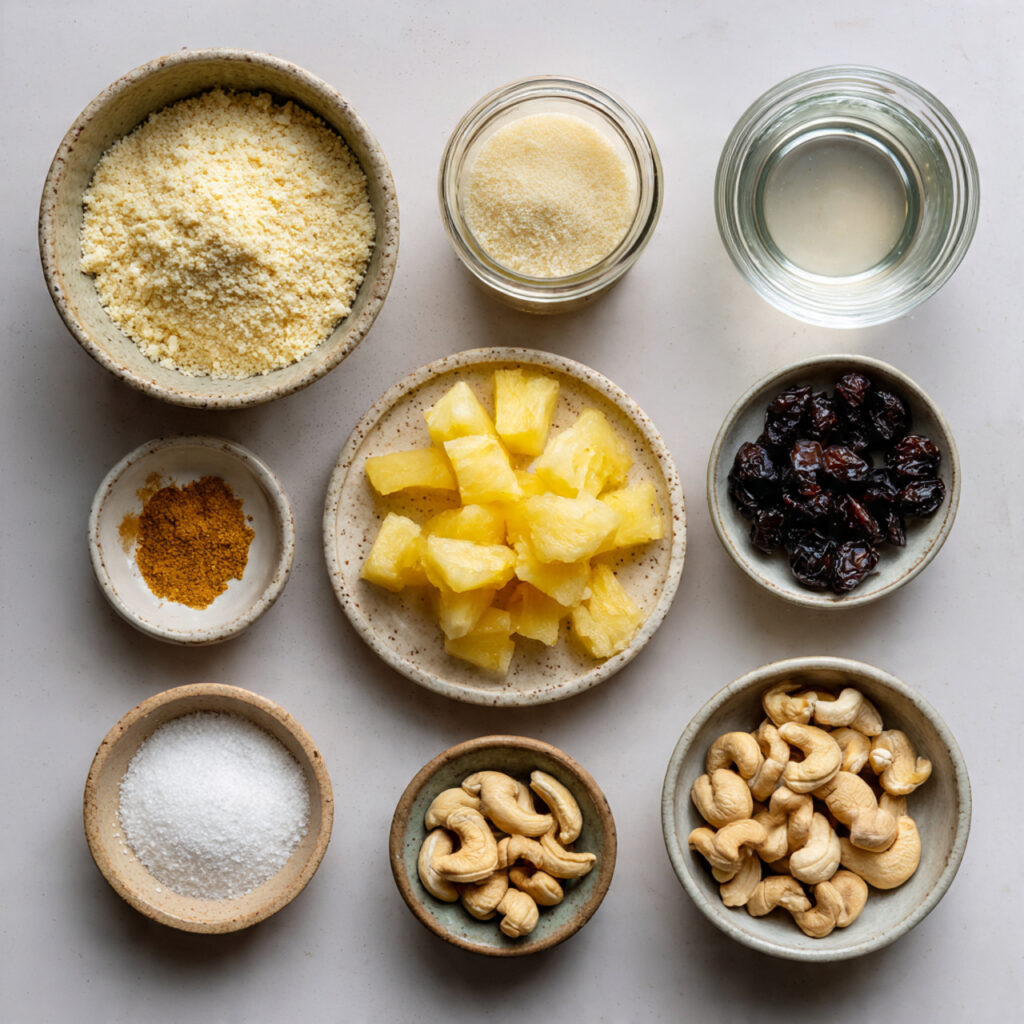
- Semolina (Rava/Sooji): 1 cup – The base of the halwa which gives it body and creaminess.
- Pineapple (finely chopped): 1 cup – Adds fruity sweetness and a slight tang.
- Sugar: 3/4 cup – Balances the tartness of the pineapple and gives that halwa sweetness.
- Ghee (clarified butter): 1/3 cup – Adds richness and a glossy finish.
- Cashews: 2 tablespoons – Toasted for a lovely crunch.
- Raisins: 1 tablespoon – Adds little pockets of chewy sweetness.
- Cardamom Powder: 1/2 teaspoon – Brings warmth and aroma.
- Water: 2 cups – Helps cook the semolina and pineapple together.
Ingredient Substitutions
Need to swap something? No problem!
Semolina: Use fine couscous in a pinch, though texture will differ slightly.
Pineapple: Use canned pineapple if fresh isn’t available—just drain it well.
Sugar: Coconut sugar for a deeper caramel flavor.
Ghee: Unsalted butter or neutral oil if you prefer.
Cashews: Almonds or pistachios work great too.
Ingredient Spotlight
Semolina: This coarse wheat flour is the secret behind halwa’s slightly grainy yet creamy texture. It absorbs liquid beautifully, giving that melt-in-mouth bite.
Pineapple: Besides its sweet and tangy flavor, pineapple also adds a natural brightness that balances the richness of ghee and sugar.
Instructions for Making Pineapple Halwa
Let’s turn those simple ingredients into something truly indulgent. Here are the steps to follow:
-
Preheat Your Equipment:
Place your heavy-bottomed pan over medium heat to get it ready for roasting the semolina. -
Combine Ingredients:
In the warm pan, dry roast the semolina until light golden and aromatic. Remove and set aside. -
Prepare Your Cooking Vessel:
In the same pan, add a teaspoon of ghee and sauté the chopped pineapple for a few minutes. Then add sugar and 1 cup of water. Let it cook for 5 to 7 minutes until the pineapple softens. -
Assemble the Dish:
Slowly add the remaining 1 cup of water to the pineapple mixture. Once it starts to boil, gently add the roasted semolina while stirring constantly to avoid lumps. -
Cook to Perfection:
Keep stirring until the halwa thickens and leaves the sides of the pan. Add ghee gradually while stirring to get that smooth texture. Mix in cardamom powder. -
Finishing Touches:
In a small frying pan, heat a bit of ghee and roast the cashews and raisins until golden. Add them into the halwa and stir to combine. -
Serve and Enjoy:
Serve warm with an extra sprinkle of roasted nuts if desired. Enjoy the aroma, the texture, and that rich pineapple flavor.
Texture & Flavor Secrets
The magic of pineapple halwa lies in its balance. The semolina gives it a slightly grainy yet smooth texture, while pineapple adds bits of juicy brightness. Ghee makes it rich without being greasy, and cardamom brings everything together with a whisper of warmth.
Cooking Tips & Tricks
Here’s how to make your halwa even better:
- Use ripe, sweet pineapple for best flavor.
- Don’t rush the semolina roasting—it prevents stickiness.
- Stir constantly when adding semolina to avoid clumps.
- Add ghee in parts, not all at once.
What to Avoid
Little mistakes can affect the final result, but they’re easy to avoid:
- Don’t skip toasting the semolina, or the texture will be pasty.
- Avoid adding semolina too fast into the boiling water—it will clump.
- Too much ghee at once can make it greasy instead of glossy.
Nutrition Facts
Servings: 4
Calories per serving: 310
Note: These are approximate values.
Preparation Time
Prep Time: 10 minutes
Cook Time: 20 minutes
Total Time: 30 minutes
Make-Ahead and Storage Tips
Pineapple halwa stores beautifully. You can make it ahead a day or two and refrigerate in an airtight container. Reheat with a splash of water or ghee to bring it back to life. It also freezes well for up to a month—just thaw and reheat when ready.
How to Serve Pineapple Halwa
Serve it warm in small dessert bowls, garnished with a few extra toasted cashews and a pinch of cardamom. Pair it with masala chai or a scoop of vanilla ice cream for a fun fusion twist.
Creative Leftover Transformations
Leftover halwa? Let’s get creative.
- Roll into small balls to make pineapple halwa ladoos.
- Spread between layers of sponge cake for an Indian-inspired dessert.
- Warm and serve over pancakes or waffles for a sweet breakfast upgrade.
Additional Tips
Want to make it pop even more?
- Add a few saffron strands soaked in warm milk for a vibrant hue and depth.
- Toast the cashews in coconut oil for a nutty aroma twist.
- A pinch of salt balances the sweetness and sharpens flavors.
Make It a Showstopper
Presentation matters! Serve in brass or ceramic bowls, and top with edible rose petals or silver leaf for that festive flair. A sprinkle of crushed pistachios adds beautiful color contrast.
Variations to Try
- Coconut Pineapple Halwa: Add 1/4 cup grated coconut while cooking pineapple.
- Saffron Pineapple Halwa: Soak a pinch of saffron in warm milk and add for color and fragrance.
- Pineapple Kesari Bath Style: Add a drop of yellow food color for the classic temple look.
- Nut-Free Version: Skip the nuts and use more raisins.
- Low-Sugar Option: Cut sugar by half and add a spoon of honey after cooking.
FAQ’s
Q1: Can I use canned pineapple?
A1: Yes, just be sure to drain it well and skip adding extra sugar if it’s already sweetened.
Q2: How long does it stay fresh?
A2: Up to 3 days in the fridge. Reheat before serving.
Q3: Can I skip ghee?
A3: You can use butter or a neutral oil, but the flavor will be slightly different.
Q4: Is it vegan-friendly?
A4: Use oil instead of ghee to make it vegan.
Q5: Can I double the recipe?
A5: Absolutely, just scale all ingredients evenly.
Q6: Can I use milk instead of water?
A6: You can, for a creamier result, but it will change the flavor profile.
Q7: Is it gluten-free?
A7: Traditional semolina isn’t gluten-free, but you can experiment with rice flour or millet.
Q8: Can I make it sugar-free?
A8: Use a sugar substitute like stevia, but adjust quantities carefully.
Q9: What if I don’t have cardamom?
A9: Try cinnamon or nutmeg for a different warm spice note.
Q10: Why is my halwa lumpy?
A10: That usually happens when semolina is added too fast. Stir constantly while adding.
Conclusion
There’s something timeless about pineapple halwa. Whether it’s a family celebration or a quiet evening treat, this dish brings sunshine to your plate. Soft, sweet, a little tangy, and perfectly warm—this one’s a total game-changer. Go ahead, give it a try. It’s worth every bite.
Print
Pineapple Halwa
- Prep Time: 10 minutes
- Cook Time: 20 minutes
- Total Time: 30 minutes
- Yield: 4 servings 1x
- Category: Dessert
- Method: Stovetop
- Cuisine: Indian
- Diet: Vegetarian
Description
This warm, fruity Pineapple Halwa blends juicy pineapple with toasted semolina, rich ghee, and fragrant cardamom for a melt-in-your-mouth dessert.
Ingredients
- 1 cup semolina (rava/sooji)
- 1 cup finely chopped pineapple
- 3/4 cup sugar
- 1/3 cup ghee
- 2 tablespoons cashews
- 1 tablespoon raisins
- 1/2 teaspoon cardamom powder
- 2 cups water
Instructions
- Place a heavy-bottomed pan over medium heat. Dry roast the semolina until light golden and aromatic, then set aside.
- In the same pan, add a teaspoon of ghee and sauté the chopped pineapple for a few minutes. Add sugar and 1 cup of water. Cook for 5–7 minutes until the pineapple softens.
- Add the remaining 1 cup of water and bring to a boil. Gradually stir in the roasted semolina to avoid lumps.
- Stir continuously as the halwa thickens and leaves the sides of the pan. Gradually add ghee while stirring. Mix in cardamom powder.
- In a separate small pan, heat ghee and roast the cashews and raisins until golden. Add to the halwa and mix well.
- Serve warm, garnished with additional roasted nuts if desired.
Notes
- Use fresh pineapple for the best flavor and texture.
- Roasting semolina properly prevents a sticky texture.
- Reheat leftovers with a splash of water or ghee to refresh.
- Add saffron for color and depth.
Nutrition
- Serving Size: 1 bowl
- Calories: 310
- Sugar: 26g
- Sodium: 5mg
- Fat: 14g
- Saturated Fat: 8g
- Unsaturated Fat: 5g
- Trans Fat: 0g
- Carbohydrates: 42g
- Fiber: 2g
- Protein: 4g
- Cholesterol: 15mg