
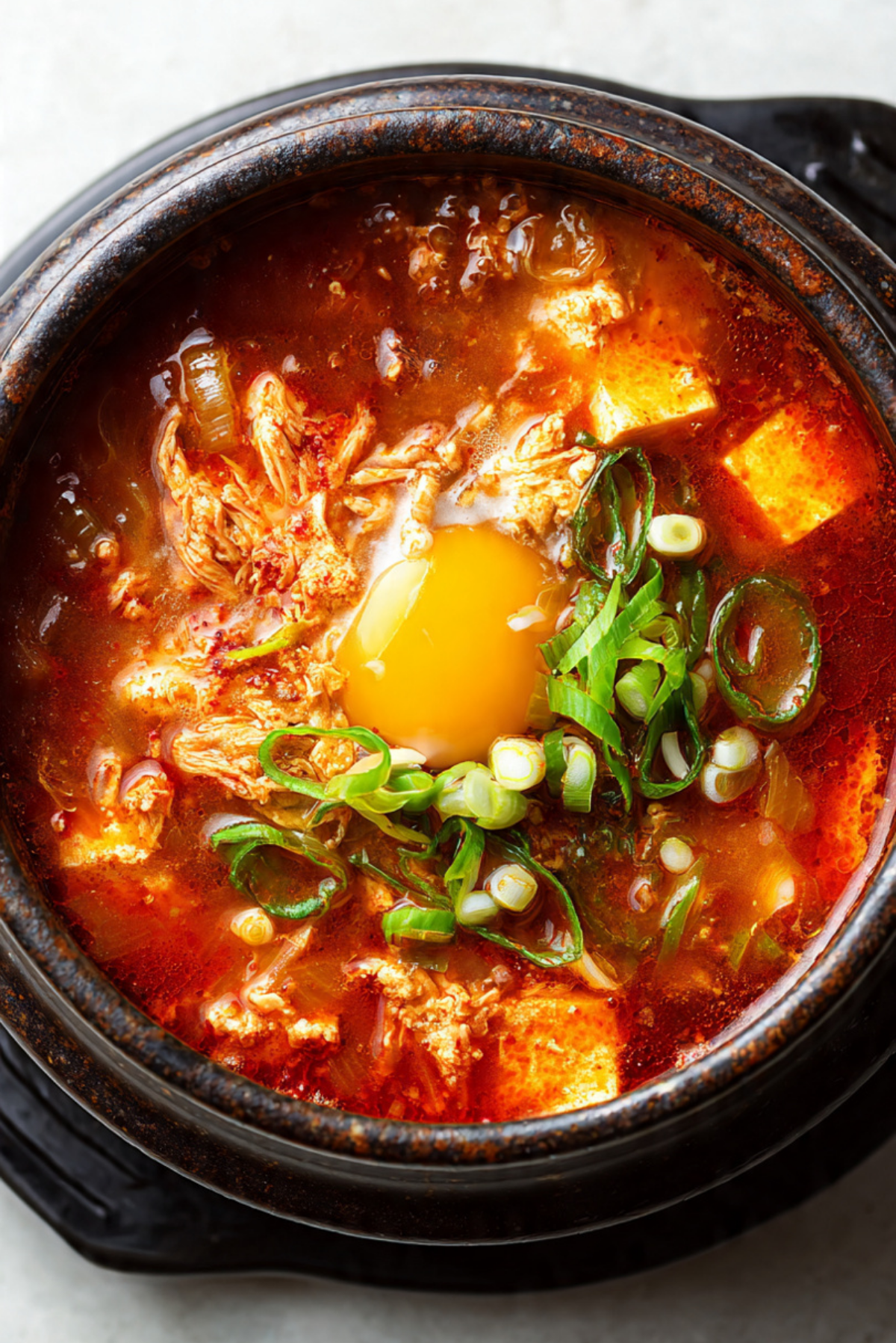
There’s nothing quite like digging into a bowl of Sundubu Jjigae on a cold day, especially when it’s packed with soft, silky tofu, bubbling red broth, and tender tuna flakes that melt into every spoonful. Tuna Sundubu Jjigae is the comforting, spicy stew you didn’t know you needed — fiery yet delicate, light yet deeply flavorful, and so simple you’ll be making it over and over again.
How This Spicy Comfort Food Won Me Over
The first time I tasted this version of Sundubu Jjigae, I was craving something warm but didn’t have fresh meat on hand. All I had was a can of tuna, soft tofu, and some basic Korean pantry staples. I threw it all in a pot, added an egg on top, and let it simmer. What came out was unexpectedly rich and comforting, with the tuna adding a subtle, oceanic depth that balanced the spicy, garlicky broth beautifully. It instantly became a go-to when I needed something quick, nourishing, and soul-soothing.
A Bit of History in Every Bowl
Sundubu Jjigae, which translates to “soft tofu stew,” is a classic Korean comfort food. Originating in the coastal regions of Korea, this stew traditionally includes seafood or pork, gochugaru (Korean red pepper flakes), and uncurdled tofu called sundubu. It’s typically served still bubbling in a stone pot, often with a raw egg added on top just before serving. While the tuna version is a modern twist, it captures all the heartwarming elements of the original, offering a faster, pantry-friendly option with just as much depth.
Why You’ll Love This Spicy Tuna Stew
This isn’t just another soup. It’s a full sensory experience — steamy, spicy, and packed with flavor. Here’s why it belongs in your weeknight dinner rotation:
Versatile: Use tuna, seafood, or even mushrooms for a vegetarian version.
Budget-Friendly: Uses pantry staples like canned tuna and soft tofu.
Quick and Easy: Ready in under 30 minutes, start to finish.
Customizable: Adjust spice levels, add noodles or rice cakes, or crack in an egg.
Crowd-Pleasing: Perfect for chilly nights and flavor lovers alike.
Make-Ahead Friendly: The broth can be prepped in advance.
Great for Leftovers: Reheats beautifully and tastes even better the next day.
Pro Cooking Tips for Deep Flavor
Sundubu Jjigae is fast, but every step matters. Here’s how to coax out maximum flavor:
- Use oil to sauté the gochugaru for a richer, more aromatic base.
- Add garlic early to infuse the broth with warmth.
- Don’t over-stir the tofu — you want it to remain soft and pillowy.
- Crack the egg in at the end, cover, and let it gently poach in the steam.
- A few drops of sesame oil before serving elevate the whole dish.
Essential Tools for Stew Success
You don’t need much to make this happen, but a few tools help bring it together beautifully.
Korean Stone Pot (ttukbaegi): Keeps the stew hot and bubbling.
Medium Saucepan or Pot: Works great if you don’t have a stone pot.
Ladle: For serving the stew gently without breaking the tofu.
Wooden Spoon: Perfect for stirring the base and controlling the heat.
Knife & Cutting Board: For prepping aromatics and garnishes.
Ingredients That Bring the Heat and Heart
Each ingredient plays a distinct role in the stew’s warmth, richness, and satisfying texture.
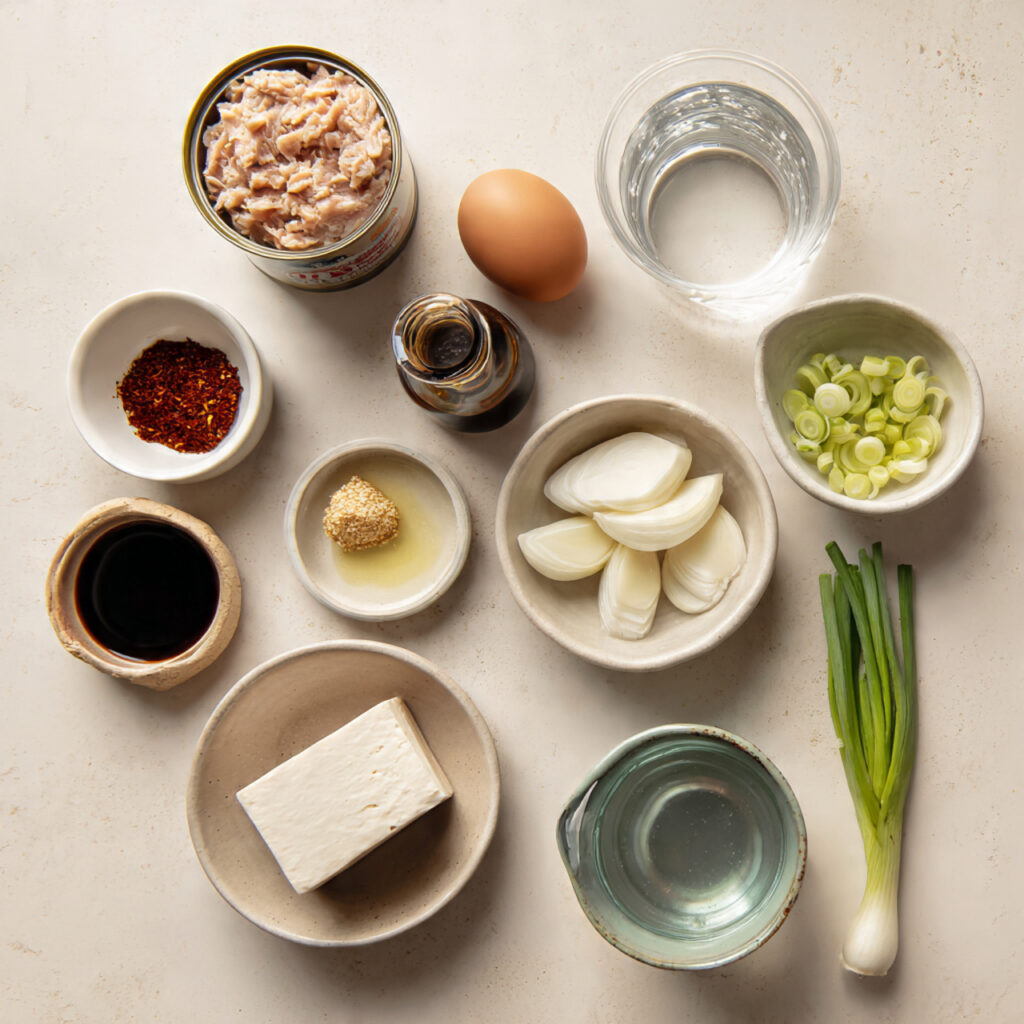
- Canned tuna: 1 (5 oz) can, drained. Adds a subtle, savory seafood depth.
- Soft tofu (sundubu): 1 tube or 14 oz. Silky and delicate, it absorbs all the broth flavors.
- Gochugaru (Korean chili flakes): 1 tablespoon. The core spice element.
- Garlic: 3 cloves, minced. Builds warmth and complexity.
- Onion: ½ medium, sliced. Adds sweetness and body.
- Soy sauce: 1 tablespoon. For umami and balance.
- Fish sauce: 1 teaspoon. Optional, but enhances depth.
- Sesame oil: 1 teaspoon. For that nutty finishing aroma.
- Vegetable oil: 1 tablespoon. Used to bloom the chili flakes.
- Egg: 1, whole. Cracked in for richness and visual appeal.
- Green onion: 1 stalk, sliced. For garnish and brightness.
- Water or anchovy broth: 1½ cups. Forms the stew base.
Easy Ingredient Swaps
Missing something? No worries — here are some swaps that still deliver big flavor.
Tuna: Use canned salmon, clams, or shrimp.
Soft tofu: Silken tofu is a great backup.
Gochugaru: Substitute with crushed red pepper flakes (reduce quantity).
Fish sauce: Use extra soy sauce or a pinch of salt.
Anchovy broth: Use chicken broth, dashi, or plain water.
Ingredients That Deserve the Spotlight
Soft Tofu: This uncurdled tofu has an almost custard-like texture that breaks apart gently and soaks up every bit of flavor.
Gochugaru: Korean chili flakes are essential for that signature deep red hue and smoky-spicy aroma.
Step-by-Step: Making Tuna Sundubu Jjigae
Now let’s walk through the comforting process of bringing this stew to life.
- Preheat Your Equipment: If using a stone pot, heat it gently over medium heat. Otherwise, set a saucepan on the stove.
- Combine Ingredients: In the pot, heat vegetable oil. Add gochugaru and stir quickly to bloom the chili in the oil.
- Prepare Your Cooking Vessel: Add garlic and onion to the pot, sauté until fragrant, about 1–2 minutes.
- Assemble the Dish: Pour in water or broth, soy sauce, and fish sauce. Stir, then gently spoon in the soft tofu in large chunks.
- Cook to Perfection: Bring to a simmer and let it cook for 5–7 minutes until everything is heated through and the flavors blend.
- Finishing Touches: Add the tuna and let it warm through. Crack in the egg, cover the pot, and turn off the heat to let the egg poach gently.
- Serve and Enjoy: Drizzle with sesame oil, top with green onions, and serve bubbling hot with steamed rice.
The Magic of Texture and Taste
You get a fiery red broth that’s light yet bold, silky tofu that melts into the spoon, tender flakes of tuna for protein, and a soft egg that adds creaminess. Every spoonful hits sweet, salty, spicy, and savory notes with a gentle warmth that lingers.
Tips to Make It Even Better
You’re only a few steps away from next-level stew. Try these:
- Add a dash of sugar to mellow extra heat.
- For stronger flavor, use anchovy broth or kombu dashi.
- Add kimchi for a tangy, fermented depth.
Mistakes to Avoid
A few slip-ups can dull the magic, so watch out for:
- Over-stirring the tofu: Keep those silky chunks intact.
- Boiling after adding egg: Let it poach gently under steam.
- Skipping the chili oil base: Blooming the gochugaru in oil is key to flavor.
Nutrition Facts
Servings: 2
Calories per serving: 270
Note: These are approximate values.
Prep and Cook Time
Prep Time: 10 minutes
Cook Time: 15 minutes
Total Time: 25 minutes
Make Ahead, Store, and Reheat
You can prepare the broth base ahead and refrigerate for 2 days. Store leftovers in an airtight container and reheat gently on the stove. Avoid freezing, as tofu changes texture. If storing, don’t add the egg until reheating for best results.
Serving Suggestions That Shine
Serve it piping hot in the pot it was cooked in, with a side of steamed rice and kimchi. Add a small bowl of roasted seaweed or pickled radish for contrast. For a full Korean meal, pair it with other banchan (side dishes).
What to Do With Leftovers
Leftover stew? Here’s how to refresh it:
- Add rice and simmer for a spicy porridge.
- Toss in instant noodles and cook for a hearty meal.
- Add extra broth and veggies to turn it into a second-day soup.
Extra Notes for Flavor Lovers
- Taste as you go, especially when adjusting spice and salt.
- Double the batch and store the base for future weeknight dinners.
- Always serve with rice — it balances the heat and completes the dish.
Make It Visually Stunning
Use a traditional stone pot for serving. Garnish with a perfectly poached egg, sliced scallions, and maybe a few sesame seeds. That bubbling red broth is your showstopper — lean into it with bold color and minimal distractions.
Variations That Keep It Fresh
- Seafood Mix: Add clams, shrimp, and squid for a seafood sundubu.
- Mushroom Version: Replace tuna with shiitake and enoki mushrooms.
- Kimchi Twist: Stir in ½ cup of aged kimchi for a tangy kick.
- Spicy Cheese: Add a slice of mozzarella or Korean cheese at the end.
- Tofu & Noodles: Drop in glass noodles for a more filling version.
FAQ’s
Q1: Can I make this less spicy?
Yes, reduce the gochugaru or use mild chili flakes.
Q2: Is there a vegetarian version?
Yes, omit the tuna and fish sauce. Use mushrooms and vegetable broth.
Q3: Can I use firm tofu instead?
You can, but soft tofu gives the traditional texture.
Q4: Can I skip the egg?
Absolutely, it’s optional.
Q5: How do I store leftovers?
Refrigerate in an airtight container for up to 2 days.
Q6: What if I don’t have a stone pot?
Use a saucepan or any small pot — it’ll taste just as great.
Q7: Is it gluten-free?
Check labels on soy sauce and fish sauce. Use tamari for a gluten-free option.
Q8: Can I double the recipe?
Yes, just use a larger pot and adjust seasoning to taste.
Q9: What rice goes best with this?
Short-grain white rice is the classic pairing.
Q10: Can I freeze it?
Not recommended — tofu texture changes when frozen.
Conclusion
Tuna Sundubu Jjigae brings all the warmth, flavor, and comfort of traditional Korean cuisine into a dish that’s easy enough for a weeknight and impressive enough for guests. Trust me, once you try it, this fiery little stew will become a regular part of your cozy dinner rotation.
Print
Tuna Sundubu Jjigae
- Prep Time: 10 minutes
- Cook Time: 15 minutes
- Total Time: 25 minutes
- Yield: 2 servings 1x
- Category: Soup/Stew
- Method: Stovetop
- Cuisine: Korean
Description
A spicy, comforting Korean stew made with soft tofu, canned tuna, gochugaru, and a poached egg. Tuna Sundubu Jjigae is bold, flavorful, and perfect for a quick and hearty meal.
Ingredients
- 1 (5 oz) can tuna, drained
- 1 tube (14 oz) soft tofu (sundubu)
- 1 tablespoon gochugaru (Korean chili flakes)
- 3 cloves garlic, minced
- 1/2 medium onion, sliced
- 1 tablespoon soy sauce
- 1 teaspoon fish sauce (optional)
- 1 teaspoon sesame oil
- 1 tablespoon vegetable oil
- 1 egg
- 1 stalk green onion, sliced
- 1 1/2 cups water or anchovy broth
Instructions
- Heat a stone pot or medium saucepan over medium heat.
- Add vegetable oil and gochugaru. Stir quickly to bloom the chili flakes in oil.
- Add garlic and onion, sauté for 1–2 minutes until fragrant.
- Pour in water or broth, soy sauce, and fish sauce. Stir to combine.
- Spoon in soft tofu in large chunks. Simmer for 5–7 minutes.
- Add the tuna and stir gently to warm through.
- Crack in the egg, cover, and turn off heat to poach gently for 2–3 minutes.
- Drizzle with sesame oil, garnish with green onion, and serve hot.
Notes
- Use a stone pot for authentic presentation and heat retention.
- Do not stir tofu too much to maintain soft texture.
- Adjust spice level by reducing gochugaru or adding a pinch of sugar.
Nutrition
- Serving Size: 1 bowl
- Calories: 270
- Sugar: 3g
- Sodium: 580mg
- Fat: 16g
- Saturated Fat: 3g
- Unsaturated Fat: 10g
- Trans Fat: 0g
- Carbohydrates: 8g
- Fiber: 1g
- Protein: 21g
- Cholesterol: 130mg