
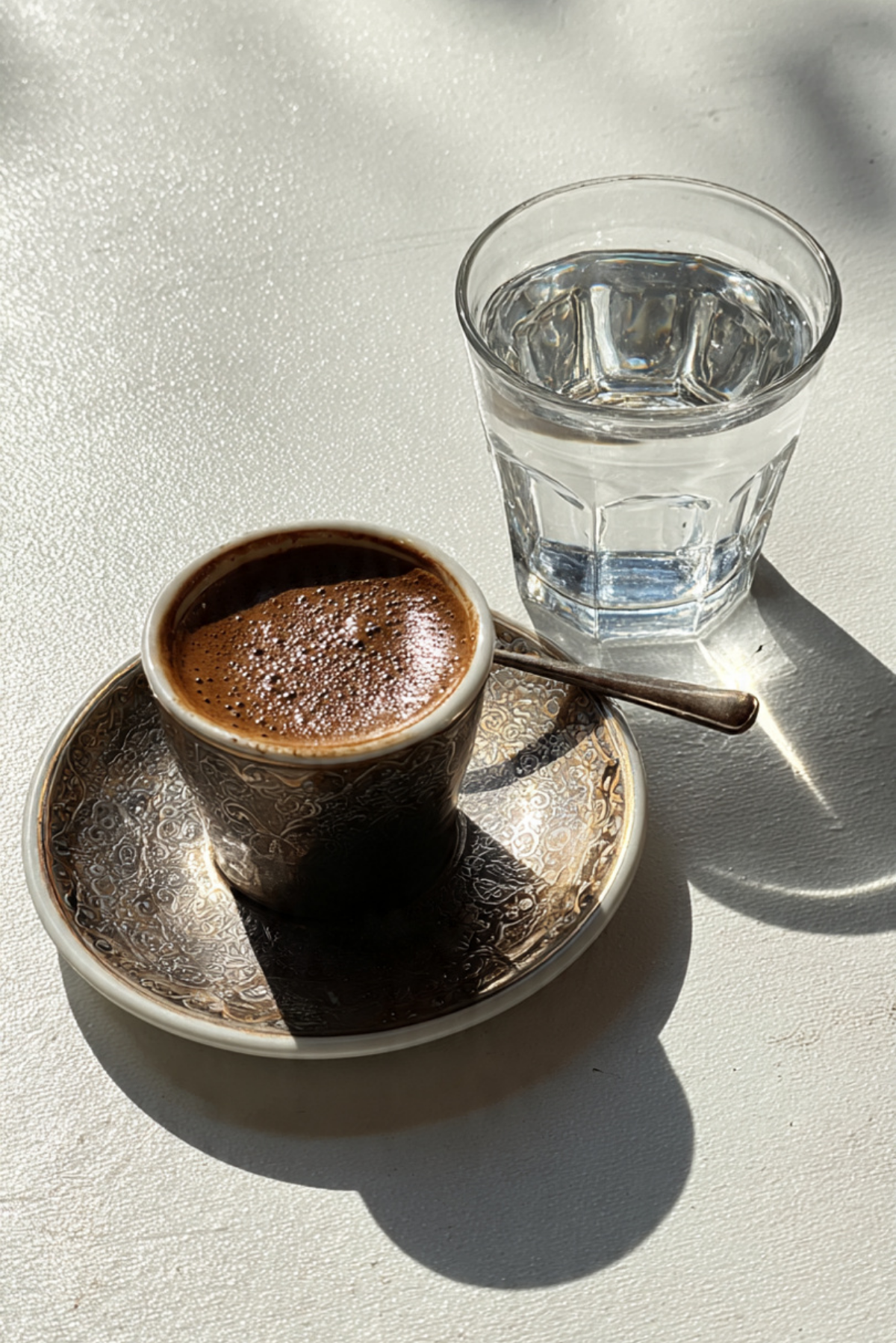
There’s a kind of magic in the ritual of Turkish coffee. The slow simmer. The rich aroma. That signature frothy top. It’s not just a drink — it’s a moment. Whether you’re sipping slowly at a café or brewing a pot at home, Turkish coffee invites you to pause, connect, and savor every last drop. It’s small in size but bold in character, with a flavor as deep as its centuries-old tradition.
Why This Tiny Cup Packs a Big Punch
Turkish coffee is more than strong coffee in a small cup. It’s rich, velvety, and unfiltered, made with finely ground beans and brewed slowly over heat. What makes it stand out? The layer of foam on top, the thick texture, and the lingering aroma that fills the room. It’s not just about caffeine — it’s about experience, flavor, and even fortune telling if you’re up for reading the grounds.
A Taste of History in Every Sip
Turkish coffee traces back to the 16th century during the Ottoman Empire. It was traditionally prepared in a cezve, a small copper pot, and served during ceremonies, weddings, and social gatherings. Recognized by UNESCO as an Intangible Cultural Heritage of Humanity, this style of coffee has long been a symbol of hospitality and respect. Its strong, rich brew and slow preparation method encourage conversation, reflection, and connection.
What Makes This Recipe So Reliable and Loved
When you make Turkish coffee the traditional way, you’re tapping into centuries of expertise. Here’s why it’s a recipe worth mastering:
Versatile: Customize the sweetness level and even add spices like cardamom.
Budget-Friendly: Requires just coffee, water, and sugar — that’s it.
Quick and Easy: Just a few minutes on the stovetop.
Customizable: Make it plain, sweet, or spiced based on mood.
Crowd-Pleasing: Perfect for hosting or intimate chats.
Make-Ahead Friendly: Grounds can be pre-measured for quick brewing.
Great for Leftovers: You can use leftover grounds in desserts or for reading fortunes.
Expert Tips for Brewing Like a Local
The technique makes all the difference here. These insider tips help you brew a cup worth savoring:
- Use extra-fine ground coffee, almost powder-like for the right consistency.
- Stir only before heating — never during. This helps preserve the foam.
- Simmer gently over low heat. Rushing ruins the texture.
- Watch closely for the foam to rise, then remove quickly to avoid boiling.
- Let it rest a few seconds before pouring so the grounds settle slightly.
Tools You’ll Need to Nail It
The setup is minimal, but a few specific tools help get it just right.
Cezve (Ibrik): A small, long-handled pot traditionally made of copper or brass.
Demitasse Cups: Tiny, handle-less cups made for sipping.
Spoon: For stirring sugar and mixing before heating.
Coffee Grinder (optional): If grinding your own beans ultra-fine.
Heat Source: A stovetop or even sand for traditionalists.
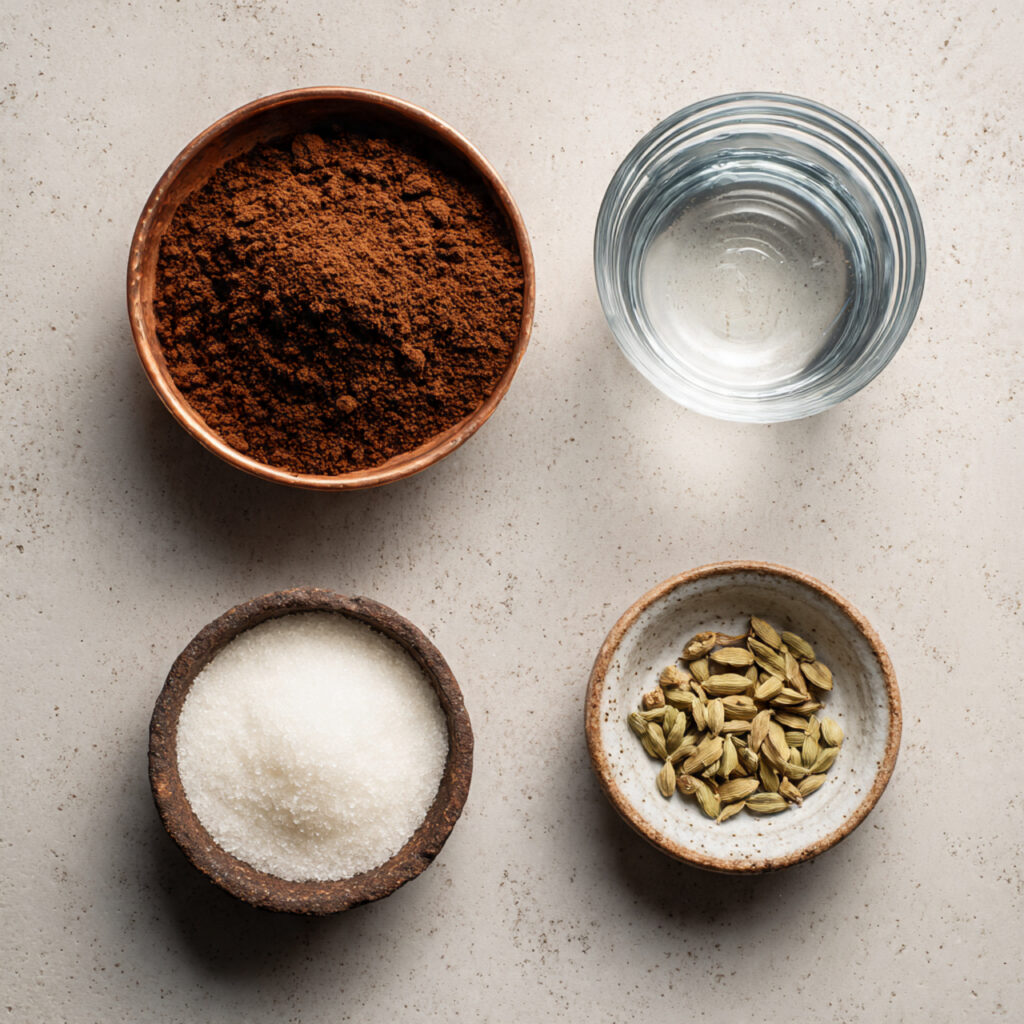
Ingredients You Will Need For Authentic Turkish Coffee
Simple ingredients, big flavor. Here’s what you’ll use:
- Finely Ground Turkish Coffee: 2 heaping teaspoons. The star of the show, rich and intense.
- Cold Water: 1 demitasse cup (about 100 ml). Cold water helps control the brewing process.
- Sugar (Optional): None, 1/2 teaspoon, or 1 teaspoon depending on your preference.
- Ground Cardamom (Optional): A pinch. Adds a fragrant, warm note.
Simple Substitutions to Make It Work for You
Need to adjust based on what’s in your kitchen? Here’s how:
Turkish Coffee: Use any dark roast ground to a powdery texture.
Sugar: Try brown sugar or skip entirely.
Cardamom: Replace with cinnamon or omit for a classic cup.
Water: Always cold, but filtered for best clarity.
Spotlight on the Core Ingredient
Finely Ground Turkish Coffee: This coffee is ground finer than espresso — closer to flour. This texture is what gives Turkish coffee its rich body and lets the grounds settle naturally without filtering.
Brewing Turkish Coffee Step-by-Step
It’s not difficult, but it’s precise. Follow this process and you’ll be a pro in no time.
1. Preheat Your Equipment:
No need to preheat, but have your cezve and cups ready.
2. Combine Ingredients:
Add cold water to the cezve, then add coffee and sugar (and cardamom if using). Stir until dissolved.
3. Prepare Your Cooking Vessel:
Place cezve on low heat. Do not stir again.
4. Assemble the Dish:
Let it slowly come to a simmer. Foam will begin to rise — do not let it boil.
5. Cook to Perfection:
Just before it boils, remove from heat. Spoon some foam into each cup.
6. Finishing Touches:
Return to heat, allow foam to rise again, then pour carefully into cups.
7. Serve and Enjoy:
Let sit a few seconds to settle, then sip slowly. Do not stir.
Texture and Flavor That Linger
Turkish coffee is smooth yet strong. The foam adds a silky layer, while the sip is rich and dense. Flavors are bold and slightly bitter with a natural chocolatey finish. If cardamom is added, it gives a spicy, exotic lift that balances the strength.
Tips and Tricks for Better Coffee Moments
Tiny tweaks can make big improvements:
- Use cold water for better foam development.
- Measure sugar exactly — you can’t adjust it afterward.
- Don’t walk away — it can boil over fast.
- Always pour slowly to keep the grounds at the bottom.
What Not to Do: Common Brewing Errors
Here’s how to avoid disappointment:
- Stirring after heating — breaks the foam.
- Heating too fast — ruins flavor and texture.
- Using medium or coarse grounds — won’t settle and feels gritty.
- Pouring too fast — brings too many grounds into the cup.
Nutrition Details
Servings: 1
Calories per serving: 10 (plain)
Note: These are approximate values.
Time You’ll Need
Prep Time: 2 minutes
Cook Time: 5 minutes
Total Time: 7 minutes
Make-Ahead and Storage Advice
You can pre-measure coffee and sugar into small containers for easy brewing later. Once brewed, Turkish coffee should be enjoyed immediately. Leftovers are not reheated — the foam disappears and grounds become gritty.
Serving Tips for Tradition and Taste
Serve in demitasse cups with a glass of cold water on the side to cleanse the palate. Pair with Turkish delight, dates, or a piece of dark chocolate. If you’re feeling playful, read the grounds once the cup is empty.
What to Do With Leftovers
Don’t toss those grounds — they still have purpose:
- Use as a natural exfoliator in homemade scrubs.
- Mix into chocolate cake batter for depth.
- Compost for garden-friendly use.
Extra Touches for the Perfect Brew
Want to elevate the experience?
- Serve on a small tray with a sweet treat.
- Add a drop of rose water for an exotic twist.
- Use ornate cups for added flair.
Fun Variations to Explore
Mix things up with these spins on tradition:
- Sweet & Spiced: Add cloves or nutmeg.
- Chocolate Coffee: Stir in cocoa powder before heating.
- Iced Turkish Coffee: Brew, cool, and pour over ice.
- Double Foam: Remove foam twice for a layered effect.
- Saffron-Infused: Add a thread of saffron for a floral note.
FAQ’s
Q1: Can I use espresso grounds?
A1: Not ideal — they’re not fine enough. Turkish grind is best.
Q2: What’s the foam called?
A2: It’s simply referred to as “köpük” in Turkish — a mark of a well-made cup.
Q3: Why is my coffee gritty?
A3: Either the grind was too coarse or it was poured too fast.
Q4: Can I add milk?
A4: Traditional Turkish coffee is always black. Milk disrupts the balance.
Q5: Is it strong in caffeine?
A5: Yes, it’s concentrated, so sip slowly.
Q6: What kind of roast should I use?
A6: Medium to dark roast is traditional for depth and boldness.
Q7: Do I need a cezve?
A7: It helps, but you can use a small saucepan if needed.
Q8: How do I clean the cezve?
A8: Rinse with water, no soap — it affects future brews.
Q9: Is Turkish coffee gluten-free?
A9: Yes, it’s naturally gluten-free.
Q10: Can I serve it cold?
A10: It’s meant to be hot, but you can chill it — just skip the foam.
Conclusion
Turkish coffee is more than a brew — it’s a ritual, a pause, and a story in every cup. With its strong, rich flavor and signature foam, it turns a simple moment into something special. Trust me, once you’ve mastered the method, you’ll look forward to this little luxury each day.
Print
Turkish Coffee
- Prep Time: 2 minutes
- Cook Time: 5 minutes
- Total Time: 7 minutes
- Yield: 1 serving 1x
- Category: Drinks
- Method: Simmering
- Cuisine: Turkish
- Diet: Gluten Free
Description
Turkish coffee is a rich, velvety brew made with finely ground coffee and slow-simmered to create its signature frothy top. Deeply traditional and flavorful, it’s meant to be savored slowly in small sips.
Ingredients
- Finely Ground Turkish Coffee: 2 heaping teaspoons
- Cold Water: 100 ml (about 1 demitasse cup)
- Sugar (Optional): 0.5–1 teaspoon, to taste
- Ground Cardamom (Optional): a pinch
Instructions
- Pour cold water into a cezve (small coffee pot).
- Add coffee, sugar (if using), and cardamom. Stir until dissolved.
- Place over low heat and let it slowly come to a simmer without stirring again.
- As foam rises, remove from heat just before it boils. Spoon some foam into the serving cup.
- Return cezve to heat, let foam rise again, and pour remaining coffee gently into the cup.
- Let rest briefly to allow grounds to settle. Do not stir. Serve and enjoy.
Notes
- Use the finest ground coffee possible — it should feel like powder.
- Never let it boil fully or stir once heating begins.
- Serve with a glass of cold water and a sweet like Turkish delight.
Nutrition
- Serving Size: 1 demitasse cup
- Calories: 10
- Sugar: 0g
- Sodium: 5mg
- Fat: 0g
- Saturated Fat: 0g
- Unsaturated Fat: 0g
- Trans Fat: 0g
- Carbohydrates: 1g
- Fiber: 0g
- Protein: 0g
- Cholesterol: 0mg